
Deadline – Speak Out Against the NZ Gene Technology Bill
The Gene Technology Bill represents what can only be described as a mass biological intervention in our national food systems and medicine.

The Gene Technology Bill introduces sweeping changes to the governance of gene technologies and genetically modified organisms (GMOs), threatening the safety and integrity of our medicine and food systems. Doctors and scientists alike are gravely concerned that the science supporting the safety of GMOs remains incomplete and in its infancy.
Speaking as health professionals committed to science and human health, we urge you to educate and empower yourself about this legislation and share your thoughts with the Health Select Committee using the resources on this page.
Submissions close on 17 February 2025 at 11:59pm, and your action matters now more than ever.
Mass Biological Intervention Without Proven Safety
The Gene Technology Bill prioritises deregulation and fast-tracking GMO technologies into our everyday lives. However, this approach overlooks critical gaps in scientific understanding and accountability, exposing New Zealanders to unknown health risks while undermining public trust.
This is a hugely complex bill and it is being rushed through parliament. There is no need for such haste and a number of MPs who commented at the first reading suggested that far wider consultation should have occurred before the bill got to the health committee. Most who commented were supportive of the perceived, potential medical benefits indicating that there is still a need for further education and understanding about the harms caused by the mRNA injections, and the huge risks associated with further ones.
We are facing genetically modified organisms in our food and our medicines without labelling. Once GMO products are released, they will be irretrievable and will be in our environment forever, infiltrating air, food, water, soil and us. The genie will be out of the bottle never to be put back in.
Inside the Gene Technology Bill
We are particularly concerned about Part 2 (Regulation of gene technology) Subpart 5 (Mandatory medical authorisations) and Subpart 6 (Emergency authorisations).
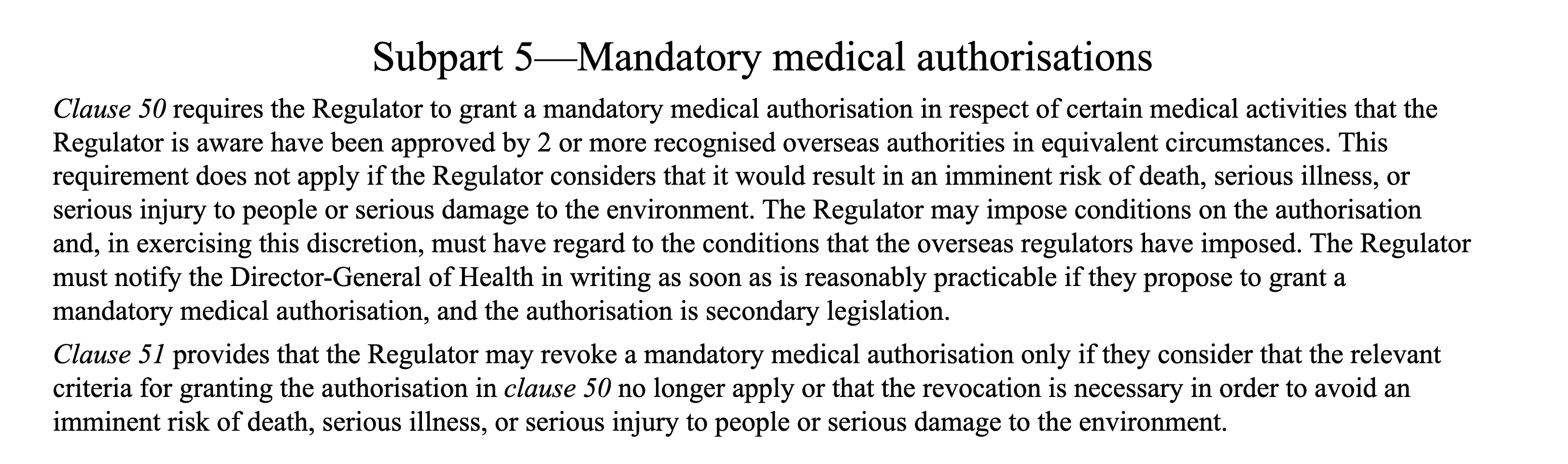
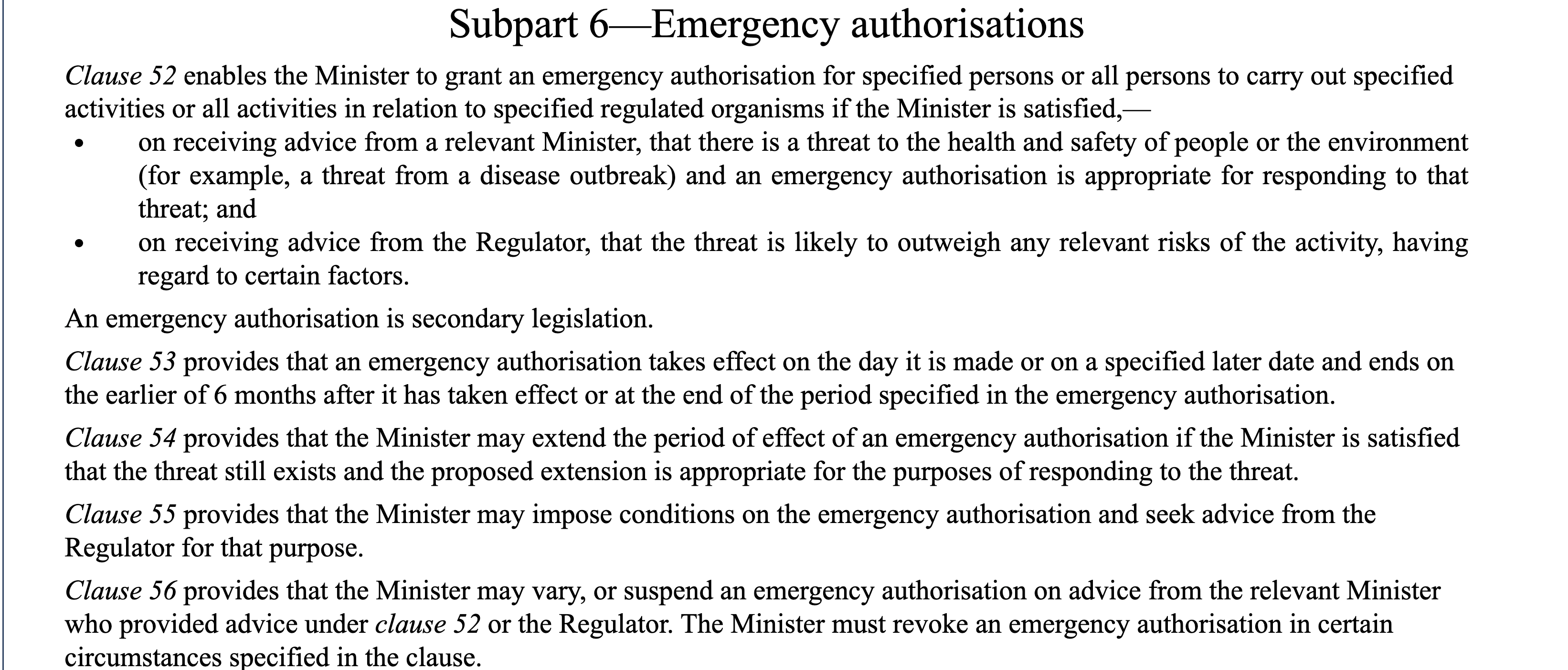
These measures raise questions about their potential application. One possibility could involve its use during a widespread health crisis requiring a universally administered gene-based vaccine.
Major concerns
The Gene Technology Bill operates on the principle that GMOs are considered safe unless proven otherwise, rather than requiring thorough proof of safety before their release.
GMO Lack of Safety Testing
- No long-term human health studies
- No consideration of cumulative health effects
- No research regarding multi-generational impact
Biased Research Base on GMOs
- Industry funds most research
- Independent scientific research is suppressed
- Health concerns systematically dismissed
Abandons precautionary principle
- Assumes safety until harm is proven
- Fast-track GMO approval is inappropriate
- Puts profits before safety
Scientific Uncertainty and Bias in GMO Research
The science supporting the safety of GMOs is far from comprehensive—despite claims otherwise. Research repeatedly highlights the health risks of genetically modified organisms, yet independent studies face dismissal and hostility, while industry-funded conclusions are given undue weight.
One has to ask, if GMOs are entirely safe, why is it so difficult for independent scientists to investigate them openly?
Examples of this disparity include:
The Pusztai Study
This 1990s research identified intestinal damage and immune suppression in rats fed genetically modified potatoes. Despite passing independent review, the study and its lead researcher, Dr Árpád Pusztai, faced public smearing and professional attacks designed to undermine its validity. Yet, this work remains a critical demonstration of how GMO safety cannot be presumed. We’ve seen the same demonisation of independent scientists and suppression of “inconvenient” science with covid.
The Séralini Study
Published in 2012, this long-term analysis found tumours and organ damage in rats exposed to GMOs and glyphosate. While the study met publication standards, its findings were aggressively denounced in the media. An industry-linked journal retracted the work unjustly, only for it to be republished elsewhere, maintaining its conclusions but adding to public confusion.
These studies and the controversy they caused showcase an alarming double standard in the GMO debate.
Unethical Removal of Labelling
“If I had the choice I would certainly not eat [GMO potatoes].”
– Dr Árpád Pusztai
The Gene Technology Bill’s elimination of mandatory GMO labelling represents a deliberate attempt to hide what will be in our food supply and medicine. This mirrors industry tactics used internationally, where companies aggressively fight labelling because they know consumers reject GMO products when given the choice.
The bill would strip away New Zealanders’ fundamental right to know what they’re feeding their families, turning us into unwitting test subjects in a massive genetic experiment. Just as the Pusztai and Séralini studies faced suppression when they revealed health dangers, this labelling ban aims to prevent the public from making informed choices or tracking health impacts.
History shows that once GMOs enter the food chain unlabelled, proving their connection to emerging health problems becomes nearly impossible – exactly as industry intends. This bill isn’t about health — it’s about industry and profits. Our growing organics industry will be under threat and we will no longer be the proud GE Free NZ. We are likely to see many products containing unlabelled GE ingredients.
Oversight and Sovereignty at Risk
The Gene Technology Bill compromises New Zealand’s regulatory sovereignty by prioritising foreign approvals over robust local assessments. It enforces automatic authorisation of GMOs if approved by two overseas regulators, ignoring New Zealand’s unique environmental and public health contexts. Even more concerning is the provision for emergency authorisations, which could pave the way for hasty GMO approvals during crises—reminiscent of the expedited rollout of the experimental c-19 vaccines. These fast-tracked processes bypass meticulous domestic scrutiny, heightening the risk of unforeseen consequences for public health, safety, and the environment.
By downplaying the need for comprehensive local evaluations and disregarding the precautionary principle, the bill threatens the health of New Zealanders while yet again decreasing public confidence in New Zealand’s commitment to high safety standards. Transparent decision-making, open debate and strong, independent oversight are imperative to safeguard the wellbeing of all New Zealanders and to ensure accountability in the regulation of gene technologies.
Learning from Recent History
The past five years have shown the devastating consequences of insufficient biotech regulation. The experimental modRNA technologies used in the c-19 pandemic injections highlighted how quickly and extensively technologies can fail and cause harm when not thoroughly tested and vetted. Instead of applying lessons from this experience, the current bill doubles down on deregulation, leaving public health at high risk.
We strongly oppose a reckless rush towards GMO technology. New Zealand deserves legislation built on well-measured policies based on the precautionary principle which preserves and prioritises health, safety, and informed consent.
NZDSOS’ Recommendations for the Gene Technology Bill:
- Say no to the Bill and insist on increased regulation, including regulation that would ensure gene therapy injections (such as the c-19 ‘vaccine’) are included appropriately as GMOs.
- Prioritise the Precautionary Principle in all GMO related legislation which assumes harm is likely until safety is proven (rather than assumption of safety).
- Require labelling for all GMO products, including derivatives, that are currently available in NZ, to guarantee choice for consumers.
- Ensure truly independent, long-term safety studies before any GMO is released into the environment or approved for human health use.
What you can say
express Fundamental Concerns
Use some of the concerns below to prepare your response.
Write your Personal Impact Statement
Add a personal statement. Explain how this legislation would affect you and your family’s ability to make informed health choices.
Demand critical actions be taken
Finally, close with what the Health Committee must be do to protect New Zealanders.
Act Now to Protect Public Health
This legislation is too significant to rush through without robust debate. Health professionals have an obligation to advocate for strict accountability and independently verified, peer-reviewed science – at NZDSOS we are committed to these principles. Until these safety thresholds are met, we believe that New Zealanders should oppose the current permissive direction of this legislation.
Submit feedback to the Gene Technology Bill Submission Page before 17 February 2025. Demand evidence-based policies, transparency, and scientifically rigorous safeguards. Together, we can prevent poorly regulated biological experiments from jeopardising New Zealand’s health and future. Take action today.


I wish to oppose this Bill on the grounds that it will damage the reputation of New Zealands Image of providing clean green product to the world. I addition I do not want the food for me and my family contaminated by these GI things.. I do not believe it will help our export industry or the health of our population
Hi
I wish to make a submission on this bill and wanted to read this entire page away from the restricted computer time of this public library, but have noticed only one section window can be opened at a time. It would be handy if you made it available as a PDF, or at least that all sections can be opened at the same time to do a page save.
Very powerful (and dark?) forces are attempting to change the DNA of the planet.
We are also about to enter the age of Aquarius. The changeover could be around 2160.
The two could be connected.
Note: Year 0 was the changeover to Pisces.
you guys n gals are great! II have a 14 page submission prepared so far, significant contributed to by your posts and Guys. However I think there is something important missed. There is mention of other non accountability but also when a GMO is shown to cause harm and will affect the manufacturers profits; that the effects are to be kept confidential and not subject to OIA’s.
That’s nothing short of CRIMINAL!
This bill is no benefit to human health, All Rockefeller medicine is toxic. The pursuit of untold wealth and power drives this form of tyranny that has silenced for millenia natural cures. This bill only serves the corporation and money backers. These laws turn the common man into a criminal enforced by a foreign agent so I strongly oppose this bill.
Fast-track GMO approval is inappropriate
This needs more time for public awareness and consultation.