
The Hidden Cost of Roadside Drug Testing: Parliament Does It to Us Again.
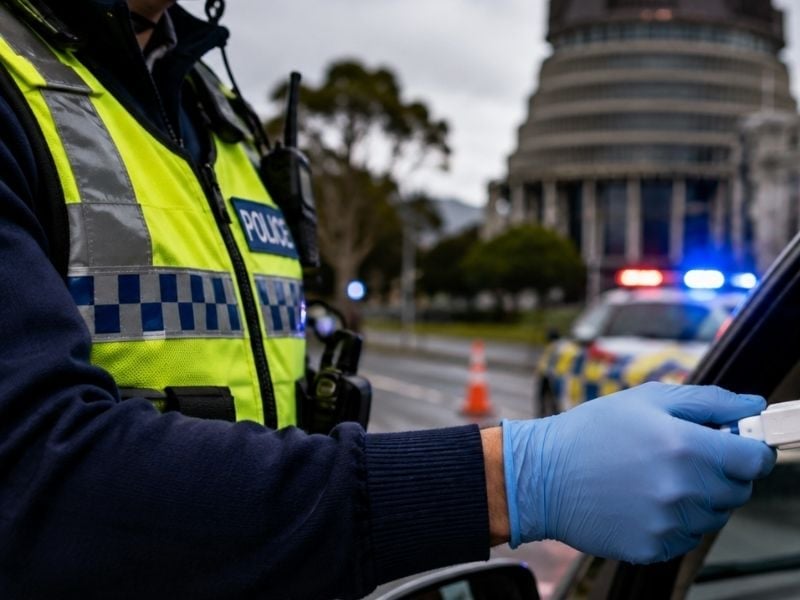
The Hidden Cost of Roadside Drug Testing: Parliament Does It to Us Again.
If ever there was an opportunity for parliament NOT to alienate further a growing chunk of the nation, it has just failed spectacularly, by doing it all again and passing the Roadside Drug Testing Act. It is almost as if this is deliberately provocative, a middle finger into the faces of Kiwis already stripped of rights and forced into medical assault.
Silent on sudden deaths in the young proximate to their covid jabs, widespread immune failure, rapid cancers and the amyloid-like rubbery structures growing quietly in many people’s blood vessels, now the Overlords are concerned to find and remove impaired drivers from our roads, whilst ignoring climbing mortality and declining fertility.
But the current random roadside drug testing in New Zealand is not a test of impairment. By wiping the test pad on the tongue it detects the presence of substances which may or may not be causing impairment in the human body. The substances may be legally prescribed. We agree that impaired drivers should not be on the road behind the wheel but randomly stopping people who are driving normally and safely and coercing them into an invasive test is not a way to achieve this which restores trust and community support. Of course there will always be some people who welcome every rule and regulation which makes their lives feel safer.
But the current approach tests for presence rather than impairment. Cannabis traces linger in the body and appear in saliva long after any high has passed, making saliva testing a relatively poor proxy for impairment. THC can remain detectable in regular users for days or even weeks, even though its intoxicating effects may last only a few hours. That means a medicinal cannabis patient who took a prescribed dose the night before, or a habitual user with high baseline levels, could test positive while driving safely.
For the other targeted drugs, methamphetamine, cocaine and MDMA, the connection to driving impairment is also unclear. At lower doses, stimulants can even improve certain motor skills. The risks are instead tied to perceptual shifts or lapses in attention, which a saliva test cannot detect. Because these drugs remain illegal globally, it is difficult to conduct the controlled studies needed to link presence and impairment. Of course, mixing them, or adding to alcohol, can raise impairment risks considerable.
So what about the rise in single vehicle crashes and those caused by a “medical event”? Might there be other explanations? Goodness knows authorities are looking well away from all the jab harms. And what about working harder on the importation and distribution of highly destructive drugs like methamphetamine, rather than demonising and punishing private citizens who are legitimate users of medical cannabis? In our view it is highly ironic that many jab injured patients otherwise unhelped, if not ignored completely, by the medical system may find some comfort and respite from medical cannabis – but risk their licenses.
The Bill of Rights and Informed Consent
As doctors, informed consent is fundamental to our work. Informed means being advised about the test, what is in it, what it will be used for, rate of false positive and false negatives, and being able to read a datasheet. Consent means agreeing freely without coercion or duress. Significant penalties constitute coercion. And assent – accepting you must do something – is NOT consent.
Section 11 of the New Zealand Bill of Rights Act 1990 states that “everyone has the right to refuse to undergo any medical treatment” https://www.legislation.govt.nz/act/public/1990/0109/latest/DLM224797. It is our view that taking a fluid sample from a body cavity for the purposes of testing for substances is a medical procedure which in theory one has the right to decline. The Health and Disability Commissioner confirms that a competent consumer may refuse medical treatment, even if the treatment would be in their best interests.
The Attorney General’s report into the legislation, written by Judith Collins in July 2024, found it was inconsistent with the Bill of Rights Act, specifically the right to be secure against unreasonable search and seizure, and the right not to be arbitrarily detained. “The intrusion on an individual’s privacy that arises from the taking of a bodily sample for the first oral fluid screening test appears disproportionate where there is no basis to suspect the individual driving is under the influence of an impairing drug,” she wrote https://www.justice.govt.nz/assets/Documents/Publications/NZ-BORA-Advice-Misuse-of-Drugs-Pseudoephedrine-Amendment-Bill-for-publication.pdf. Yet parliament passed the legislation, signalling further erosion in the contract which says we give you our money and you govern us in our interests.
Some Specific Concerns
Our concerns with roadside testing include:
- The use of an invasive test, entering a body cavity with undeclared substances on or in it. Police have responded to OIA requests that a Safety Data Sheet is not required because the DrugWipe device is a manufactured article with reagents “fully contained” and no hazardous substance accessible during normal use https://fyi.org.nz/request/32972-random-drug-testing-drivers-using-securetec-drugwipe-s3-devices-confirming-the-due-diligence-undertaken#incoming-135664. Subsequent requests have challenged the basis for these claims https://fyi.org.nz/request/34806-basis-for-20-years-of-safe-use-claim-and-sds-statements#incoming-145676.
- The lack of alternatives, such as saliva collection by dribbling, for those who wish to comply but do not want unknown substances put in their bodies.
- The excessive and coercive penalties, including a $400 fine, 75 demerit points, and a 12 hour stand down, for exercising basic human rights and declining https://www.legislation.govt.nz/act/public/1998/0110/latest/LMS822839.html.
- The presumption of guilt until proven innocent.
- The uncertainty about the rate of false positives.
A Critical Legal Distinction: Compliance versus Consent
There is a subtle but potentially powerful legal argument that has not yet been widely tested. The legislation creates a specific infringement offence for “failure or refusal to undergo an oral fluid screening test or provide an oral fluid sample” (our italics) https://www.legislation.govt.nz/act/public/2025/0012/latest/LMS965616.html.
An OIA request to Police asked specifically whether an individual may provide saliva by spitting onto the swab instead of placing it directly on their tongue. The response was clear: “A driver may not spit on the screening device. The screening device requires a driver to wipe the device pads down their tongue” https://fyi.org.nz/request/33263/response/138989/attach/3/OIA%20Response%20letter%20IR%2001%2025%2045451.pdf.
OK, but: if a person is willing to comply with the law as written by providing a saliva sample, the state should not be permitted to insist on a specific method that risks the introduction of unknown substances into the body. The question of whether the discretion is unlimited or whether it must accommodate alternative methods where no material difference in the result exists is a question that will be tested in court.
For those who wish to challenge the regime:
- Offer to provide a sample by spitting, dribbling or ladling. Make it clear you are willing to comply in a way that avoids the potential for ingestion.
- State your objection. If the officer refuses, state clearly that you are willing to provide a sample but object to the specific method required.
- Record the audio of the exchange if possible, to establish that you did not refuse to provide a sample but rather objected to the method.
- If you are penalised, seek legal advice immediately.
The Manufacturer’s Instructions and Coerced Compliance
There is a further legal tension worth examining. The manufacturer’s instructions for the device, the DrugWipe 3 S, were written presumably for a scenario of a voluntary or willing subject, and that assumption is so implicit that surely police cannot claim the technical instructions alone make the test enforceable against consent. The instructions are technical: the driver wipes the device pads down the front of their tongue to absorb a sample. This is a physical procedure, and the manufacturer’s safety claims are based on this use. Police have stated that the public is not exposed to hazardous substances during roadside testing, that there are no chemicals on the device pads, and that Police is assured by manufacturer assurances and independent safety analyses of the device. Sound familiar? [https://www.police.govt.nz/advice-services/drugs-and-alcohol/roadside-drug-driving-testing/health-and-safety-and-privacy. The notice approving the DrugWipe 3 S for use was issued by the Minister of Police on 11 November 2025 [https://www.legislation.govt.nz/secondary-legislation/pco-drafted/2025/246/en/latest/.
The law requires you to comply, but that compliance is obtained under the threat of severe penalties. This is coercion, not consent. In a legal context, we think this distinction should be critical, but we have all been here before. A consent is not legally valid if it is obtained under duress or coercion.
This specific legal tension does not appear to have been examined in the public legislative process, or in the Attorney General’s BORA report. The Attorney General’s review focused on broader constitutional issues, such as the right to be free from unreasonable search and seizure, and arbitrary detention, rather than the technicalities of the biomedical consent question. The focus of the debate was on the power to test, not on the biological safety of the test.
Your Rights and Duty, and Police Obligations
Despite understandable anxiety or resistance to engaging with the police, even when legally compelled to do so at a traffic stop, there are clear rules and laws the police must follow.
They must identify themselves, state the reason for any search, and name the Act under which it is being conducted unless impracticable https://legislation.govt.nz/act/public/2012/24/en/2025-04-05/#DLM2136536.
They cannot detain you for longer than 15 minutes solely to establish your identity https://www.police.govt.nz/sites/default/files/publications/traffic-patrol-techniques-270325.pdf.
They must inform you if you are arrested or detained of the reason and your right to consult a lawyer without delay https://www.legislation.govt.nz/act/public/1990/0109/latest/DLM225525.html.
They must treat you with humanity and respect for your inherent dignity https://www.legislation.govt.nz/act/public/1990/0109/latest/DLM224801.html.
In response to emerging stories of overreach and aggression by police officers during these stops, this is our understanding:
Under the law, motorists must stop when asked, show licence, give name and address, agree to any testing, and not resist arrest (even if you think the grounds may be unlawful; for instance, before forcibly removing a person from their car, the grounds for this must be stated and a warning given). Drivers do NOT have to answer any other questions, and they do not have to consent to the vehicle being searched.
General good policy is to be polite and calm but not overly friendly. You do NOT have to answer questions like “do you know why I stopped you”, “where are you heading”, “where have you come from” or “have you had any alcohol”. These are questions designed to give police reason to claim suspicion. The overarching question if the officer keeps you talking or seems to not be closing the encounter is: “Officer am I under arrest or am I free to go?”
Current law says that refusing the “saliva test” is punishable by a $400 fine and 75 demerit points and a 12 hour ban from driving https://www.legislation.govt.nz/act/public/1998/0110/latest/LMS822839.html.
The Sovereign Citizen Issue
We should all be free men and women of course, although this is resisted by the state. Police and judicial officers such as Justices of the Peace (JPs) are being enabled to compile a register of non-compliant people, and sovereign citizens, and to spot and deal particularly harshly with them in the case of the police. We are aware of such cases.
The Police have formalised updated advice for dealing with sovereign citizens, reinforcing a clear message to Police Association members to treat every interaction professionally and lawfully but recognise “the heightened risks and plan accordingly”. https://www.policeassn.org.nz/news/advice-on-fronting-sovereign-citizens-refined#/
Risks of and plan for what, exactly? Being schooled on human rights? The recently released Sovereign Citizens chapter in the Police Manual brings operational tactics, legal guidance and intelligence requirements into a single framework. This includes a requirement to record interactions with sovereign citizens in the National Intelligence Application and notify the Security Intelligence and Threats Group. Clearly, Know the Signs is alive and well.
Only those people who are highly experienced and confident from past success should go down this route. We are in dangerous times that do not respect the oldest streams of law and a century of modern human rights legislation.
Summary
In the light of the tremendous harms and deceptions by the pandemic government and its police agents, it is reasonable for some to be a) anxious or stressed in their presence, and b) sceptical of a safe and effective testing device where there is no list of ingredients let alone a safety data sheet which might allow informed consent.
If New Zealanders accept this sort of bodily invasion – guess what, we did from 2021 on – then what is next? That is how totalitarianism appears, by small incremental steps that people go along with. People need to ask themselves, at what point would I say NO?
Parliament rightly recognises that police should not be the ones scraping someone’s tongue, but violation of autonomy is just that whether by someone else or forced by your own hand. Come to think of it, why didn’t Ashley Ardern-Kins try this: “all the jabs have arrived but you are too many so if you want it you’ll have to jab yourselves. It’s easy, anyone can do it.”
NZDSOS is an organisation focused on biomedical science and safety. We do not condone drug-impaired driving. We insist that public health interventions be based on sound, transparent science and respect for individual rights.








Its not lawful.
Its disempowering to tell people the State(police) can do medical treatments and tests without their consent .
It’s very concerning this fascist over-reach yet again in the name of safety. I’ve seen so many single car crash wrecks on the side of the road since this life saving mRNA shots certainly makes one wonder. My driving record is impeccable, I was a professional driver for a time. I hate being regarded as a criminal. I’m certainly ‘ non compliant’ with regard to the clot shot, I’ll live to a ripe old age, unless of course they decide to round up the non compliant; they know who we are. And we know we’re being watched. It might get real nasty again. Nothing would surprise me. Good article. Informative. Thanks heaps.
Not “fascist” but Marxist
bolshevik even
dang sorry can’t resist , yes , but from the fact it was secretive bankers / world rulers, for the love of money . That is, ‘fake jew’ new York bankers, that funded the bolsheviks , who were bloody hit men ,not with any real affiliations other than money . The bankers then used Marxism ,as a means of total control ,and to kill as many Christians as they could . Helen ,or hellion , was first to really admit it ,she was out to get Christianity out of NZ , Winston actually was the only mp to ask why at the time . Our understanding is NZ govt is a corporation , registered with Dunne & Bradsheet ,and now also Companies house ,and, it is basically run by agents of the global reserve bank …. ie new york fake jews ,the Bolsheviks daddy .
nice, just had this debate ,over what Ronald Regan said about fascism coming in the disguise of liberalism . My understanding is fascism =state control over everything ,at gun point . While Communism is ,state control over everything ,at gun point ….
Question: do the police have legal authority to ‘drug-test’ people engaging in other forms of transport as well, i.e. walking and cycling?
P.S. I probably should have asked ‘claim to have legal authority’ rather than ‘have legal authority’ given the circumstances.
It is beyond blindingly obvious that the legal mechanism of institution (in spite of the AG report and post hoc understanding of the methodology of membrane contact and its lubrication by saliva) was facilitated by profound intellectual and ethically impoverished consideration. The implication then arises that it was engineered by intent and the co-operation of erstwhile parliamentary “representatives” nodded the law through?
After all, the law appears designed on its face to install an extension of police powers for invasive screening attached to vigorous penal enforcement for refusal.
A driver does not have a right to elect a compulsory impairment test (CIT) and blood test instead of the random oral-fluid screening, The driver cannot insist on a CIT merely because they prefer blood testing or believe the saliva screen is unreliable.
The tongue swiping process is explicitly designed to minimise the legal jeopardy and the costs (to government) and practical inconvenience (to the police) of a blood test. It is concurrently designed to function as a powerful deterrent and to habituate the populace to submission.
It has the boot stamping hallmark of the tyrannical MO, the double benefit axiom.
In some future scenario the dystopian police may be performing the same procedure on the back of an absurd RAT “diagnosis” prior to dispatching the victim to a barbwire, towered and search lit “quarantine” detention facility.
This egregious assault requires urgent political attention and reversal.
Fear is still the problem.
To me its absurd that as a man/woman’s without doing injury, damage harm the State want to stop(restrain) you and take your bodily fluid.
Problem is men and woman think legislation is law.
You are a man or woman who you choose as your authority is up to you.
you want to give the State do unconsented medical treatments and take your dna /bodily fluids?
IT IS OBVIOUS THE GOVT DOES NOT RECOGNISE OUR BILL OF RIGHTS AS THEY CONSTANTLY IGNORE IT’S PRESENCE AND RUN ROUGHSHOD OVER ANY SUGGESTION OF THE PEOPLES RIGHTS.
WHAT I FIND DIFFICULT TO SWALLOW IS THAT THE POLICE WHOM WE PAY FOR THE PROTECTION AND RIGHTS OF NZ CITIZENS HAVE TURNED INTO SWAZI POLICE DOING EXACTLY WHAT THEY ARE TOLD TO DO WITOUT ANY THOUGT OF HUMANITY.
IF WE ALL DECIDED NOT TO ALLOW THE SWAB TEST AND DEMAND TO GO TO COURT TO DEFEND OUR RIGHTS IT MAY HAVE AN EFFECT ON THIS BARBEROUS ACT AGAINST US, WILL YOU SAY NO IS THE QUESTION.
a firm no.
no need to shout ,yet , but yes. Could look into the question of ‘is tax voluntary ‘ in a democracy ,vs a tyranny where yes you have a choice ,to die or not to die . the USA founders thought so and tried to set up a system with no tax on a mans labour , In NZ we do have a unique opportunity ,in that we have separate governing body ,recognized internationally ,with its flag still flying daily ,so recognized by ‘the corporation’ , the NZ Māori government .[ nothing to do with Iwi or te pati [ literally the shake down] . Māori .].
Thanks for this article. Nigel Gray has gathered great to the point info on this subject. What about the 10% false positive aspect? For someone employed that could end their employment for something they did not do then have to prove they are innocent!
Have to add ,the term sovereign citizen is a made up ‘entrapment term ‘ , ‘they know’ ,well some ,the real dark creatures that pull strings ,do . We are actually sovereign ,from birth , we are crowned ,first bit to come into the world ,with life ,at birth . you will note there is then a record of live birth ,all that is needed , taken . the obvious question is why do we need a birthing certificate ?, worth pondering ,and that it states on the document it may not be used as a form of ID ?, what is it for ? a means of entrapment in corporate monopoly board system ?. But a citizen ,is an employee of a city ,so bound by its rules ,you can not be both . We are however, ‘people’, what does the US constitution say ,of ,for , by, ‘the people ‘ ,being plural of singular, ‘people’ ,from populous = living . This where it gets interesting ; from , The Senior Courts Act 1981 defines “person” broadly, allowing it to include “a people” in certain legal contexts, which can encompass individuals, corporations, and other entities. this would suggest/admit a ‘people’ is not automatically a purse-on [ masked actor ] ,or corporation [ a non living agent orating ]. The UN ,blacks law ,and peter spillers NZ law dictionary , all loosely define, a person ,as an identity or corporation ,for trade and transaction with. Very very interesting is section 381 [2] of the Criminal procedures act ; Section 364 and this section override every enactment other than the Diplomatic Privileges and Immunities Act 1968 and the Consular Privileges and Immunities Act 1971 (whether passed before or after the commencement of this section) having the effect of granting people of any description, or the holders of stated offices or positions, protection or immunity from criminal or civil liability (or both ]. The key word ,’people of any description’ !!! , a people ,is not ,as long as they are aware ,not a person ……
The mouth is a pre digestion chamber. There are cells designed to directly absorb certain nutrients like minerals that it is common for example for sheep to lick in order to obtain. In light of this and the proven existence and use of extremely toxic carcinogenic chemicals like Ethylene Oxide – in the name of sterilisation – there is no question of not saying no.
Saying yes is to literally risk your life with or without a SDS – remember trust is already non existent.
Say yes and become another denied statistic.