Here We Go Again: Bird Flu, Lockdowns, and the Shadow of Another Vaccine Push
Before we start, a reminder that this NZDSOS article is written, like many, by people for whom the scale of medical-driven death and serious injury is inarguable, outrageous, without justification, and apparently criminal in terms of the knowledge of accruing harms held by some officials who still carry on anyway.
So, to reflect the inner truth we have arrived at through very hard work and constant self-questioning, what we write is increasingly concordant with our deeply held assessment. It has to be. We are good and true people. We are offended to the core of our beings at the loss of life, the pain and sadness of the bereaved and grieviously harmed, the cowardice of our colleagues and – above all – angry for the potential stolen future for our own loved ones. We make no apology for offending wrong-thinking people who may read.
How a play on words is being used to disguise serious engineered risks to Kiwis’ food and another push on the vaccine compliance button.
If you have been following the global health-industrial complex for any length of time, the current news cycle around H5N1 bird flu in New Zealand will feel alarmingly familiar. The script is identical: a new viral threat emerges, warning bells ring, emergency measures are implemented, and soon, the messaging turns inexorably toward vaccination with the same unanswered questions trailing behind.
The pieces are falling into place with remarkable speed. We predicted no less.
Goodness knows, we have been calling a bird flu pandemic for years, and not because nature is inevitably mischievous and careless – unless you count all humans as part of nature. Of course we are, but the behaviour of some would make you wonder.
Flockdowns Begin
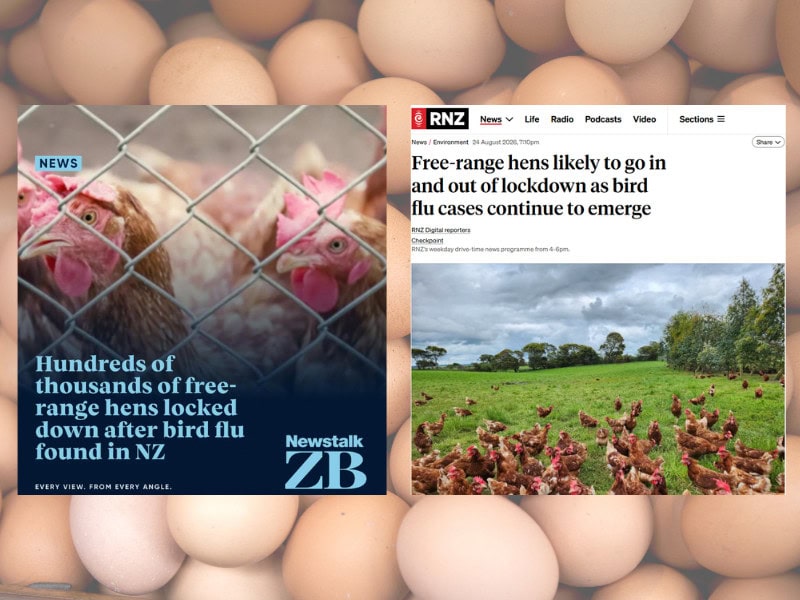
In mid July 2026 New Zealand recorded supposedly its first known case of the H5N1 strain in a wild brown skua on Petone Beach. A couple of days later a second miraculous 40-cycle (ie meaningless) PCR detection followed in a native kāhu (swamp harrier) in the Wairarapa. Within days, Mainland Poultry which supplies nearly 40 percent of the country’s eggs locked down over half a million free-range hens.
“We had a pretty busy weekend closing off the pop holes,” said CEO John McKay. Free-range eggs make up about 45 percent of the market, but consumer preferences are now secondary to the perceived threat. The chickens, we are told, “would hate being locked up,” but it is better than being “wiped out.”
Farmers report being “flockdown ready.” The infrastructure for mass animal containment is already operational.
By mid August a third bird (a northern giant petrel) tested positive in the Wairarapa.
The Standard Playbook Unfolds
In the background, we are seeing the familiar pattern of a “One Health” approach linking animal and human health authorities. The Department of Conservation is rushing to jabbinate breeding pairs of critically endangered native species, but with a different vaccine than the one that was tested in 2024. MPI is conducting surveillance, urging the public to report sick birds, and warning people not to touch dead wildlife.
Meanwhile, the Ministry of Health is working alongside the Ministry for Primary Industries and Health New Zealand as part of this “coordinated preparedness campaign”.
Perhaps they should combine to form the Ministry of Mental. You can almost hear the obscene excitement of the unhealthy globalist slobs as they get to cut down the choices of the clued-up and health conscious. We are reminded of the attempt in 2016 to pathologise people who were proactive about their health, ate organic, took targeted supplements etc. Orthorexia nervosa was the term proposed. You can bet that many of the focused and informed orthorexics won’t swallow any jabs lies incoming.
The Vaccine Question, Again
So, that inevitable question: when will the push for human vaccination begin?
As we noted in previous analyses, the planning for a human H5N1 vaccine in New Zealand, as part of a general readying of council-level and national bird flu responses, is already quite far advanced.
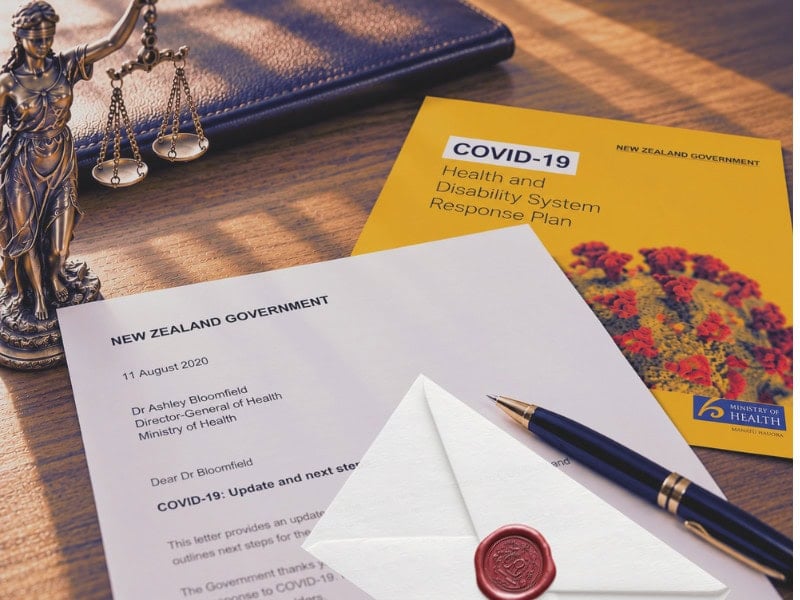
NZ’s shiny new pandemic plan of 2024 says the following:
“Depending on transmission rates, the severity of the illness and the efficacy of vaccine in preventing transmission and reducing poor health outcomes, the government may consider imposing restrictions under legislation on people who choose not to accept vaccination, in relation to work, access to premises and other activities. If legislative measures of this nature are adopted, consideration needs to be given to the New Zealand Bill of Rights Act, legitimate exemptions, international travel requirements and public acceptability in light of the wider framework of response measures.”
The Panvax vaccine has been sitting in the National Reserve Supply for years, and its provisional consent was most recently renewed in 2024 – but now as a different formulation. It contains 30 micrograms of haemagglutinin per dose, is adjuvanted with aluminium phosphate (0.5 mg per dose), and is formulated in embryonated chicken eggs, a production method that carries its own concerns for those with egg allergies, despite the data sheet’s reassurances. At least there is some data this time, and it is not an mRNA “zero risk medical product”, so beloved of the Medical Council.
The data sheet itself is revealing. It notes that clinical trials with “prototype pandemic vaccines” have been conducted, but admits: “There are currently no defined levels of serum antibody responses known to correlate with clinical protection against infection with pandemic influenza viruses.” In other words, we do not actually know what antibody level means protection, if any. We have learned a lot about the failure of injecting vaccines into the blood for what are predominantly airway infections – and developed a deep scepticism about “viral immunology” in general, thanks to the covid bioweapon assault.
Predictably, in line with the sickening new normal of medical unethics, the vaccine’s safety in pregnancy has not been studied. Healthcare providers are told to “assess the risks and potential benefits … on a case by case basis.” Well, at least that is better than the covid jab advice most NZ women got about pregnancy.
Where Are the Safety Assessments?
Our prior work has repeatedly highlighted the lack of long-term safety data for rapid-deployment vaccines. And we have been shown how truly, madly, deeply disastrous that can turn out. Cancer, heart damage, rubbery white clots found in many, and not just after death.
The same pattern emerges here. The Panvax vaccine has been given provisional consent, but where is the comprehensive safety assessment for the New Zealand population? Oh yes, now we remember that provisional consent means there is NO REQUIREMENT for safety or efficacy data, nor proof of good manufacturing practice. The US equivalent, Emergency Use Authorisation (EUA) under the PREP Act, does not even require informed, or any, consent.
Health NZ’s Medicines Adverse Reactions Committee (MARC) minutes show that “a subset of the studies should be conducted in New Zealand to reflect our population, or at least recruit Māori and Pacific Peoples”. This admission that the existing studies are not representative shines more light at the engineered inadequacy of the evidence base.
There are three potential vaccines mentioned in those minutes. It does not say they will be used for bird flu, but must be used in accordance with the NZ Pandemic Plan.
“The Australian Risk Management Plan (RMP) for the following influenza vaccines manufactured by Seqirus was submitted to Medsafe:
Panvax H5N8 pre-pandemic vaccine
Panvax pandemic influenza vaccine
H5N1 influenza vaccine”
The Threat to Ourselves and the Food Supply
As of late 2025, Public Health and Forensic (PHF) Science reported 41 human cases in the US, mostly among dairy farm workers, with mild illness and “no evidence of human-to-human transmission”. We are reminded of the initial dire warnings by the now deputy chief of the World Hijack Organisation, Jeremy Farrar of imminent bird flu in Vietnam in 2004/5. But now, if the news channels are to be believed, the virus is vaulting species and gaining function like a true champion. Billions of years of natural barriers to this viral anarchy have just fallen away apparently, completely coincidental to the era of globalism.
But if we quiet our beating hearts, bird flu is described as having “generally poor ability to transmit to humans”. The Johns Hopkins risk assessment rates the overall risk of widespread transmission as “low” even in scenarios where the illness is widespread in cattle.
https://www.yalemedicine.org/news/h5n1-bird-flu-what-to-know
At the same time, we are being told that free-range eggs, nearly half the market, could be affected. Woolworths has issued statements urging calm and asking consumers not to hoard. But the signals are mixed. If free-range birds are locked indoors long-term, their “free-range” status may be affected, potentially impacting supply chains.
Farmers are already reporting the emotional toll of culling and the lack of insurance coverage for avian influenza outbreaks. The cost of repopulating layer flocks is high, and replacement chickens could become scarce.
Disruptions to the food supply were clearly telegraphed, and now they are here. The race has been between the next plan-demic and the incoming diesel crisis. And so, the pressure to accept interventions including vaccinations intensifies. Is this the techno-Marxist wet dream again?
Will This Be the Stick?
Many have forecast exactly this scenario for years, as has the Hollywood/Netflix pipeline, churning out several decades of predictive programming of a viral zombie apocalypse. So here’s Covid 2.0, as another novel virus emerges. The media amplifies fear, little Hitlers roll out containment measures and before you can say “befuddling sudden deaths” the public health emergency becomes the justification for pushing medical products with negative safety data.
The question is: will this be the stick that gets Kiwis the prick? Surely, not nearly as many this time. The pattern from covid is unmistakable. Fear of illness, concern for loved ones, economic anxiety, and social pressure all combined to drive uptake last time – but are so many still so trusting?
However, with the added dimension of a threatened food supply, the pressure may be even more acute. The message is already being crafted: vaccinated birds protect the food supply; protected food supply protects the nation; therefore, vaccination is essential.
What We Should Be Asking – Apart From, Are You Effing Kidding Me?
- What are the long-term safety data for Panvax in the New Zealand population? Where are the studies specific to Māori and Pacific peoples that the MARC committee itself recommended? We learnt from Comirnaty that provisional consent requires NO safety data.
- What is the actual risk to the general public? With no evidence of human-to-human transmission and most cases being mild, is mass human vaccination justified at all let alone proportionate?
- Why was the vaccine stockpiled in the first place, and at what price? What evidence supported this decision, and has that evidence been made public?
- What is the exit strategy? If the alleged illness cannot be eradicated in wildlife as authorities themselves acknowledge, what is the endgame?
- How will informed consent be ensured? Given the data sheet’s admissions about limited safety data in specific populations, how will these risks be communicated?
The pieces are in motion. The question is whether we will once again be passive recipients of a predetermined outcome, or whether we just refuse to play this time. At least we can demand the transparency and evidence that any medical intervention of this scale warrants.
This article is intended for informed supporters of NZDSOS who have followed these issues closely over the years. The pattern is repeating. The harms remain ignored.






What nonsense, still buying into their words and the ” profitable + controlling virus” narrative.
I certainly will NOT take this BS
What a way to start an article…by insulting anyone that may have questions or a differing view to the author. Then to continue this line of thought mixed with more emotional rhetoric. To me the authors seem to be captured by, and creating, more fear than anything I’ve read in the mainstream.
Do the they’s of this world not understand one simple gift of life, No Farmers, No food. Where do they imagine it puffs from. As an unvaxed being I had a sudden thought while reading this…maybe people like us will be the ones left to run the world. Afterall I have already paid my dues of contempt from authorities and some family and friends. Thankfully all healed because I did the work. Leave the birds and us alone. NZDSOS have the truth and I appreciate you heaps.
I worry that we won’t have a say. No official will come onto our property that we can argue with. But Police will have access to our property enabled by checking our buying of poultry food and products. My local supplier is not on board thankfully but they maybe harassed over the loyalty point system to release names.
It is an incredibly tedious thing to have to read and put up with the relentless BS of deadly ‘viruses’. Virology is a fraudulent science. The PCR test is positive with anything, so any of the dead birds will have died of their own accord, for whatever reason and certiainly not due to any ‘virus’ but will have tested positive due to the incredibly miraculous PCR test, whose inventor said not to use it for the purpose of diagnosing diseases and then…he was ‘done away’ with. NZDSOS appears to be controlled opposition and making sure its version of scaremongering is done under the guise of appearing to question. This agenda is all about ending our food supplies. All about total control over what we eat and where we go. Like i said…all this relentless BS is so incredibly TEDIOUS.
That is exact what Bill Gates to Hell wants.
We are allowed to eat bugs so that HE has beef. AND ckean beef, no injections to HIS beef, thank you.
I think ‘virology ‘ is a fraudulent science also. However I think the perpetrators and planners of this assault on nature, of which we are part of fully believe it and know that ‘mainstream ‘, those in education, medicine, veterinarians, local government are totally brainwashed and still have the power to round up all and sundry and inject for a mythical made up sickness using the pcr ..as we all know.
With that said; this article is very well written, hard hitting and a wake up call for those that need to get the wakeup call ask questions and put the brakes on this medico fascist nonsense.
I’ve shared it with my sister, who God bless her will NOT read it, there are none so blind as those that WILL not see.
It is time to push back real hard on the ‘one health ‘ BS.
Just because many of us have awakened to the fraudulent virology, others need to be guided in the direction of truth and by sharing this article to the ‘sleepers’ they may at last get frightened fearful and try to correct the course humanity is on, for their own children’s future. Slavery is a hard sell. Its inevitable unless more wake up.
Thanks Docs, I’ve shared it. I don’t care for avoiding offending people now. This is war. And the battleground is the space between the ears. Many are conquered. The truth will set us free.
So so true Mike. The battleground is for sure between the ears!!
Thanks Alexander.
WOW,Very wonderful