
Dr Melissa McCann Leads Groundbreaking Class Action for Vaccine Injured Australians

Who is Dr Melissa McCann?
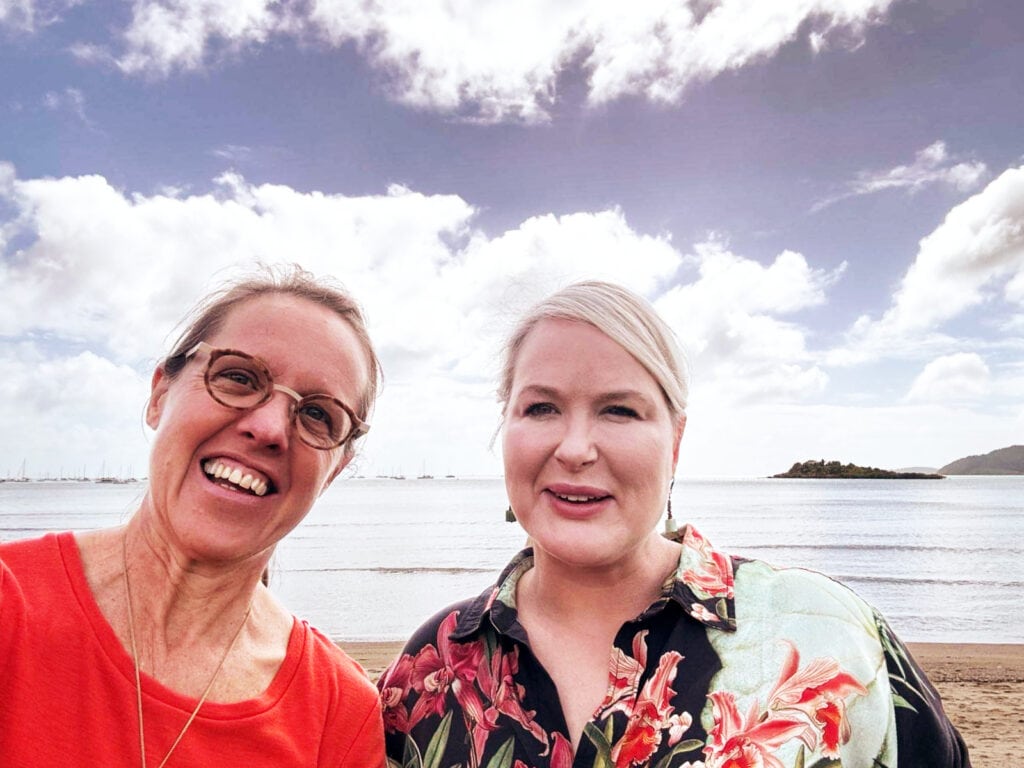
Dr Melissa McCann is an Australian General Practitioner (GP) and former pharmacist who has dedicated her career to advocating for patient safety and well-being. Her transformation from a pro-vaccine stance to becoming a vocal advocate for those affected by c-19 vaccine injuries has captured national attention.
In early 2023, Dr McCann presented at the Vaccine Conference in Sydney, supported by the United Australia Party (UAP). She chairs the UAP’s Health and Policy Committee and delivered a powerful presentation about her awakening to the issues surrounding c-19 vaccinations and the plight of the vaccine injured.
The Turning Point
As Dr McCann observed a disturbing increase in unusual medical events following vaccinations, she delved deeper into the data. Her findings were alarming, revealing numerous reports of serious cardiac events and deaths among young people, which were largely unaddressed by regulatory authorities.
Despite raising her concerns with the Australian Health Minister, her warnings were dismissed, propelling her to advocate more rigorously for public safety and transparency.
Class Action Litigation
My name is Dr Melissa McCann. This video is a summary of the COVID-19 vaccine injury class action. Please feel free to use and share this information. The website for the class action can be found here, with more information on the claim, including links to join and a link to the fundraising page.
This action has been filed in the Federal Court of New South Wales Registry by N.R. Bobbys Solicitor, acting on behalf of the lead applicants and all other COVID-19 vaccine injured parties. The defendants include the Australian Government, the Department of Health and Aged Care, Secretary Dr. Brendan Murphy, and Deputy Secretary of the Health Products Regulation Group, Adjunct Professor John Skerritt.
This action has commenced with a genuine step statement and a comprehensive statement of claim that totals more than 650 pages. This claim document can be found on the class action website.
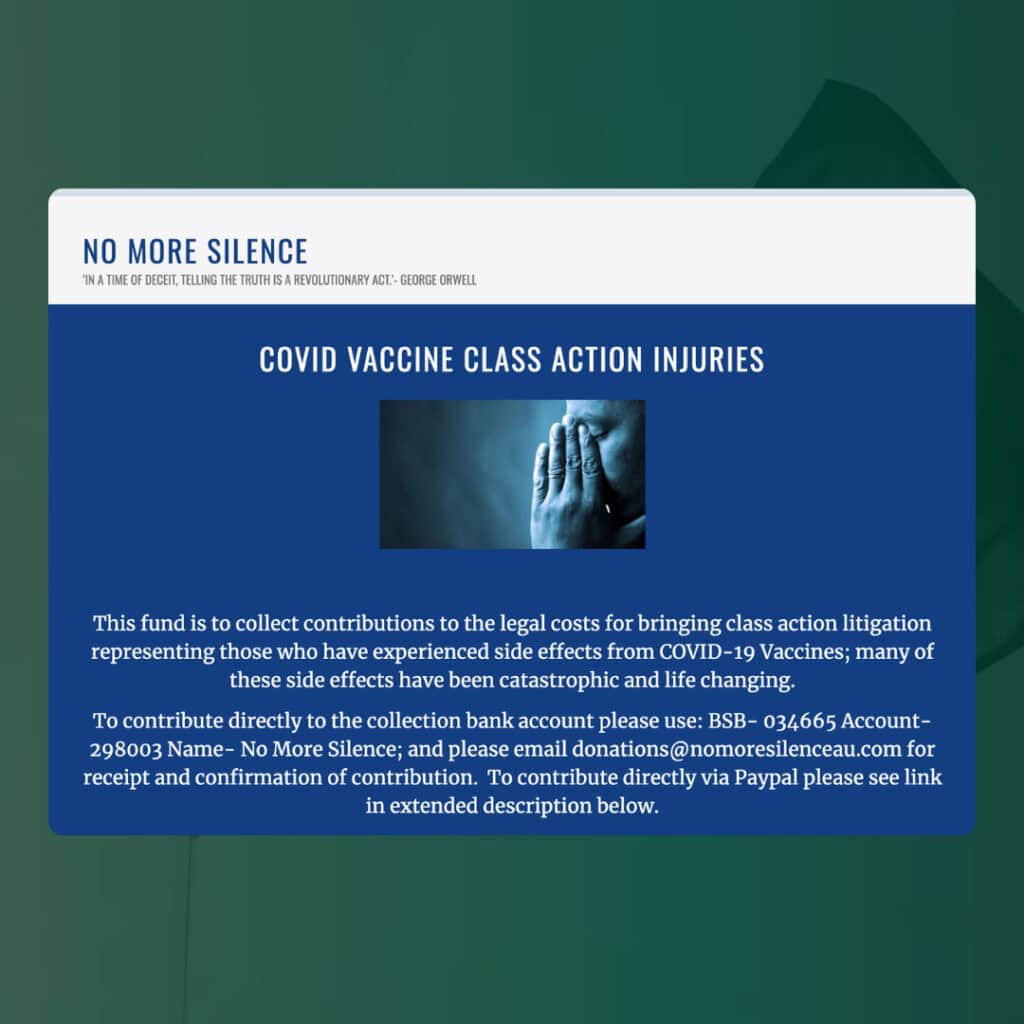
With ongoing and soon to be worsening censorship, most people are still not aware of the action, so please share. There is also a link to the crowdfunding page. Our fundraising platform is securely hosted on our own website, and we’ve raised more than $200,000 so far. Regarding the funding, if the action succeeds, all donations will be returned. I have signed on as a funder, have donated personally, and continue to donate regularly to ensure all legal fees are paid on time. I’ve also guaranteed for the injured that should the action fail, I will be responsible for adverse costs so that the injured and bereaved can join with confidence. If or when the action wins, no person takes any cut or percentage from the compensation, not myself, the lawyers, or anyone else.
Running the action in this way by not using a no-win no-fee law firm and not using a commercial litigation funder means that we are reliant on donations to run the case. But it also means the injured will receive the highest possible compensation. I wanted to avoid a situation where a class action could win, but the arrangement with the lawyers or a commercial funder resulted in the victims ending up with only a small amount, as has happened in previous class actions. However, to continue in this way, we need to fundraise very soon another $600,000. We are asking for just a $1 donation from 600,000 people to continue this historic action.
About the Action
The applicant alleges that the respondents’ actions to advance the acceptance and use of the various approved COVID-19 vaccines constitute negligence and/or misfeasance. Further, it is alleged that such negligence and misfeasance caused the class members to suffer loss or damage. Here are some of the facts and allegations that form part of the statement of claim. Importantly, these points are currently just allegations until the matter is determined by the court.
Firstly, the claim establishes that the respondents have responsibility for approval decisions and several statutory obligations under the Therapeutic Goods Act. The public was reassured of the respondents’ competence in carrying out these responsibilities. For example, “If Professor Skerritt gives it the tick, then I’m happy to take the jab.” The allegation involves the inflated risk of COVID infection, where it was known that the actual threat of COVID had a case fatality rate of around 1 in 100 for those over 65 years, and in persons under 49 years, it was 5 in 10,000. Not one person under the age of 50 had died from COVID at the time of vaccine approval. It remains the case that the median age of death from COVID is 81 years for males and 86 years for females, in a population where this age of death from COVID is equal to the median life expectancy. Death rates were inflated, whereby those dying with COVID had comorbidities in 93% of cases, and COVID was listed as the sole cause of death in only 7% of cases. The action alleges that the respondents made false and misleading statements with respect to the risk from COVID to encourage increased vaccine uptake.
Regarding the provisional approval pathway, this is not the same as the U.S. emergency use approval. Provisional determination allowed companies to submit for approval when data was not yet available due to ongoing trials, and this data could be submitted on a rolling basis. Importantly, the TGA guidelines state that for a provisional registration application, you must satisfactorily establish the safety and efficacy of the medicine, including a positive risk-benefit balance based on the preliminary clinical data. This was confirmed publicly by the respondents: “We have deliberately gone through the normal full range of regulatory approval for our vaccines. Safe regulatory approval. We have not cut any corners, and we will not register a vaccine unless we’re confident about its safety.”
The claim further alleges that it was known that the vaccines possessed exceptional inherent safety risks due to their novel properties, the widespread intended use, and the completely novel and never-before-used vaccine platform of delivery of RNA in a lipid nanoparticle or DNA material in a viral vector to self-produce the spike protein. Despite these inherent risks, it was known that the total time taken for the approvals from the commencement of testing and trials to approval was nine months for the Pfizer vaccines, ten months for the AstraZeneca vaccine, and seventeen months for the Moderna vaccine. The claim alleges false and misleading statements were made to minimise concerns about the novel platform or the approval timeline to increase vaccination uptake.
The action will also address known untested groups of people who were regardless indicated by the TGA, such as pregnant and lactating women, people with autoimmune diseases, or polyethylene glycol allergies, and people who had previously had COVID infection. The WHO had advised a contraindication for anyone who had previously experienced anaphylaxis to any food or drug due to the high risk of allergic reactions to the Pfizer vaccine. The case will allege false and misleading statements were made to reassure safety in those groups regardless of these cautions. Furthermore, based on the submitted approval data, the vaccines were not approved for the indication of preventing serious illness or death from COVID or preventing transmission of the virus. The only TGA-approved indication for any of these vaccines to this day is the prevention of COVID-19 disease defined as a positive PCR test and true viral symptoms of any severity. There is no licensed indication for use to prevent transmission or to prevent severe disease and death, nor has there ever been. The case will allege that false and misleading statements were made regarding these unapproved indications.
The clinical trial data erroneously concluded efficacy in the 90-plus percentage ranges due to using relative rather than absolute risk reduction figures. The absolute risk reduction of contracting symptomatic COVID for the Pfizer product was only 0.7%, with a number needed to treat (the number of doses to prevent one case of symptomatic COVID-19 infection) of 141 doses. For Moderna, the absolute risk reduction was only 1.1%. Regarding the safety risk of death following the vaccines, it was known at the time of approval that 21,000 elderly patients died when the Pfizer vaccination program commenced in Norway. Despite advising the public that there were no specific risks to the elderly, John Skerritt stated in documents obtained under Freedom of Information that the adverse reactions of nausea and diarrhoea caused a turn for the worse in fragile patients and confirmed that one in one thousand elderly patients had died. A document from Pfizer requested editing and watering down of the draft media release, and the product information did not contain these specific warnings for doctors around cautions for use in the elderly.
As a doctor, I find this point especially egregious because ultimately those in nursing homes may possibly have had a more favourable benefit-risk ratio, even with one in one thousand dying after the vaccine. If all nursing home residents caught COVID, up to one in 100 may have died from COVID. But withholding the information on the deaths from doctors and the public appears deliberately negligent. Had we known this, doctors might have been able to ensure the vaccines were not given to residents who already had poor renal function or who had recently been unwell and were dehydrated. We could have ensured optimal fluid intake prior to vaccination, and these deaths after vaccines could have been prevented. Instead, I have spoken to many nursing home workers who reported a tragic number of cases of elderly residents dying soon after receiving the vaccine. These were the vulnerable population that the vaccines were supposed to protect the most.
It was also known in the Pfizer trial that one patient in the clinical trial had a cardiac arrest and died approximately two months after the second vaccine. One patient died from a heart attack three days after the first Pfizer dose, but the causality was dismissed entirely on the erroneous basis that cardiac arrests and heart attacks are common events in the general population. There were also eight other events of cardiac arrest, as well as cases of sepsis and metastatic cancers in the clinical trial participants, all of which were simply dismissed by the FDA as unrelated to the vaccine. Severe adverse events occurred in up to 4.6% of clinical trial participants aged under 55 years. Severe adverse events are those that result in death, hospitalisation, are life-threatening, result in disability or require medical or surgical intervention, or cause a congenital abnormality or defect. This rate of severe adverse events was significantly higher than the risk of severe adverse events from COVID infection for those aged under 55. These severe events occurred more frequently after the second dose compared to the first, which could be considered a re-challenge by causality assessment criteria and is supportive of likely causality.
For severe adverse events of special interest, these are severe adverse events that are predefined medically as significant events that may be causally connected to the vaccine. In the clinical trial for the Pfizer vaccine, there was a risk difference of 10.1 serious adverse events of special interest per 10,000 vaccine recipients between the vaccine and placebo group. This provided a harm-benefit ratio of 25 when a harm-benefit ratio of 0.1 or less is considered acceptable for approval, and any ratio greater than one indicates literally doing more harm
than good with every dose. These clinical trial results have recently been reviewed by a published peer-reviewed literature from independent biostatisticians who called for a formal harm-benefit analysis of the vaccines.
For the AstraZeneca vaccine, the clinical trial demonstrated one case of multiple sclerosis, one case of transverse myelitis, and one case of autoimmune haemolytic anaemia in the clinical trial. These were each highly likely to have been related to the AstraZeneca vaccine but were determined unlikely to be related to the vaccine based on the bare assertion of AstraZeneca, despite having no patient-level data for the TGA to assess themselves. The claim will allege false and misleading statements were made to increase vaccination uptake despite the reports of causal deaths in the elderly and the reports of deaths in the clinical trials.
Are any of the vaccines dangerous or going to kill you? There’s no evidence at all that any of the vaccines are dangerous or would kill you. They are all very carefully tested by our TGA, which is one of the best regulatory authorities in the world. Is the health risk of side effects from any of the vaccines greater than the health risks to the community of COVID? There’s no evidence to support that. We now have quite good evidence of the vaccine rollout in a number of countries where they’ve needed to do it in an emergency situation. The evidence suggests that while there are some minor side effects, serious side effects are very limited, and the risk is much greater of the disease than being vaccinated—much, much greater. More than 10 times as many people have died from paracetamol from Panadol than from adverse events due to COVID vaccines.
Turning to the non-clinical trial data, it was known, for example, for the Pfizer product that lung inflammation in monkeys was almost identical in the vaccine and placebo group, indicating minimal benefit from the vaccine. Studies of immunogenicity and immunotoxicity to examine, for example, the induction of autoimmune disease were not performed. Pharmacokinetic studies were not performed. Distribution studies ceased after just two days, and the TGA simply accepted Pfizer’s justification not to perform these studies due to the products being vaccines, despite the fact the products were never-before-used gene therapy products. No data as to the degradation of the dangerous spike protein was provided or obtained by Pfizer or the TGA. Antibodies declined after just five weeks, raising questions about long-term efficacy. Metabolic studies ceased after just two days, despite the fact that the nano lipids were very poorly metabolised and barely cleared from the liver at all, being present in multiple organs. How or even if these nano lipids clear from the body or their metabolic pathway is entirely unknown. These are highly inflammatory nanoparticles, and they distribute across the blood-brain barrier into the neurotissues, spinal cord, bone marrow, heart, and to the ovaries and testes. Carcinogenicity and genotoxicity studies were also not performed, despite the fact that it has been known for over 60 years that synthetic lipid adjuvants have an inherent risk of carcinogenicity.
For example, the U.S. patent for the aluminium-based vaccine adjuvant discusses the option of using a synthetic or mineral lipid adjuvant for use in vaccines but stated that it was found that this was not suitable because the mineral oil was not metabolised by the animal host and therefore could be a carcinogen. Pfizer justified the absence of genotoxicity and carcinogenicity studies in part by using the concept of the threshold of toxicological concern. They referenced the ICH M7 guideline. This guideline was developed to define an acceptable intake for any unstudied chemical that poses a negligible risk of carcinogenicity. It gives an acceptable limit of 1.5 micrograms per day. Pfizer calculated 1.5 micrograms per day times 365 days in a year times 70 years to give a total acceptable lifetime toxicity limit, then divided by two for two doses per year, and calculated 19,000 micrograms as an acceptable dose for each twice-yearly dosing. They stated this limit was therefore over 300 times the exposure amount for any given dose.
However, that very same ICH M7 guideline, which was referred to by Pfizer but perhaps or allegedly not read by the TGA, acknowledged that intermittent higher dosing can have more risk than a continuous low dose. In the case of intermittent dosing, the acceptable daily intake should be based on the total number of dosing days, not the time interval over which the dosing occurs. The guideline provides a table and an example for a drug administered once a week for two years, which would mean 104 dosing days. For the twice-yearly dosing for the Pfizer vaccine over 70 years, it is 140 dosing days, or a total of five months of dosing days. The acceptable intake per dose is actually 20 micrograms, not 19,000 as Pfizer calculated. The threshold is well exceeded in a single dose. Remembering that there were multiple cases of malignancy in the clinical trial and in the post-marketing surveillance reporting ratios from the TGA’s own data released under Freedom of Information, elevated proportionality reporting ratio levels were shown for a range of malignant neoplasms, including melanoma, lymphoma, leukaemia, breast, and prostate cancer.
There were also known inherent risks for the mRNA platform, including the risk of the unevaluated RNA regions with the presence of microRNAs or potential oncomirs, which are small RNA sequences that cause cancer. The TGA acknowledged in a Freedom of Information request that they had not evaluated these. The pleading also describes other known issues with the mRNA sequence, including the use of the synthetic pseudo-uridine-modified nucleotides and the RNA untranslated regions, as well as sequences coding for mitochondrial RNA with potential catastrophic consequences. The non-clinical studies also showed high amounts of pro-inflammatory cytokines, including Th2 cytokines, high levels of eosinophils, and large unstained cells, changes in serum chemistry, massive increases in acute phase proteins, as well as infiltration of macrophages. The claim will allege false and misleading statements in relation to the non-clinical data, in addition to alleging the decision to approve in all of the circumstances was negligent.
The dose of the lipids in the vaccine is below the threshold internationally assessed for genotoxicity and carcinogenicity. These lipids are commonly used in a range of other human therapeutics, and even at higher levels, there isn’t evidence of genotoxicity and carcinogenicity. They are distributed through various parts of the body, as are lipids that you have if you have a sausage or a steak for breakfast. The lipids are hydrolysed and destroyed by the body fairly rapidly, as are dietary lipids.
The claim further alleges that the non-clinical and clinical data provided evidence for VAED, or vaccine-associated enhanced disease. This is a situation where someone who is vaccinated later contracts the disease that the vaccine is meant to protect against and develops a range of inflammatory consequences, ranging from death to new diseases, worsening of existing diseases, and a vast range of organ damage. This can also cause a prolonged clinical disease course, which might be referred to as long COVID.
Regarding potential risks in pregnancy, using Pfizer as one example, the initial category B2 stated that the fertility and developmental toxicity study in rats showed increased supernumerary lumbar ribs in fetuses from Comirnaty-treated female rats. This statement was removed without explanation, and the category changed to a B1. This fertility and developmental toxicity study demonstrated, among other matters, an increase in the pre-implantation loss rate of 9.8% in the vaccinated group versus 4.1% in the placebo group rats, effectively doubling the equivalent of miscarriage rates in animal studies. The study demonstrated a variety of other fetal anomalies in the animal studies, as well as one of the pregnant rats developing a solid dark heterogeneous mass adherent to the liver tissue, which sounds unequivocally like a liver tumour in this rat. In the control group, a total of 11 anomalies or malformations were found from a litter size of 21, and in the Pfizer vaccine group, a total of 28 anomalies or malformations were found in the same litter size of 21. This summary table does not even include one of the animals for reasons unknown: dam number 255. In the depths of the hundreds of page-long study, we find a report for this rat fetus and the anomaly of situs inversus totalis of the thoracic and abdominal cavities, which is a rare and serious congenital abnormality—a mirror image transposition of the abdominal and thoracic organs. This is a serious fetal anomaly in this animal.
To be clear, the final categorisation of B1 in pregnancy is defined by the TGA as no increase in harmful effects in humans, and studies in animals have not shown evidence of an increased occurrence of fetal damage. The claim alleges negligence by the respondents in approving the vaccine for pregnancy despite this data and providing for a category B1 classification.
Regarding the approvals in children and young people, using the example of the Pfizer product, these were based on clinical efficacy endpoints of antibody response, not on COVID cases. They were approved when the case fatality rate for a young person from COVID is 0%. While the AusPAR for the Pfizer paediatric product stated that there were no reports of adverse events of special interest in young people in the clinical trial, it was known to the TGA that by the approval date of December 7, 2021, there were a total of 399 reports of these adverse events of special interest in Australian young people aged under 18 in the TGA DAEN database, including two cases where death was a reported outcome. There have been multiple cases of deaths reported in young children, several of which the TGA appears to have described as causal from the vaccines based on Freedom of Information documents. The TGA was required to convene VSIG for all serious and unexpected adverse events after vaccination, particularly for those where public confidence could be
compromised. Instead, the TGA allegedly attempted to withhold these assessments from the public and has not called VSIG for these or thousands of other serious adverse events reported.
Lastly, without getting too philosophical, I would like to recognise some of the good that has come from this horror. I have seen the greatest strength and courage from those who are injured and bereaved, who have selflessly advocated for and assisted others who are suffering. Many have given their time, energy, and money to fight for and care for their fellow human beings. There has been almost a spiritual movement and an awakening as many are turning away from Big Pharma and big medicine, finding strength and meaning and faith in their lives, and freeing themselves from the fear that has allowed for the control of humanity over the past few years. Many are now looking at that fear squarely and calling it for what it was and is: an evil and a horror that justified the most atrocious behaviour towards even our own families, friends, and colleagues. From Matthew 10:26: “Therefore do not fear them, for there is nothing covered that will not be revealed, and nothing hidden that will not be known.”
Driven by her findings and the urgent need for accountability, Dr McCann has now embarked on a landmark federal court action on behalf of more than 500 Australians. This class action seeks damages related to alleged c-19 vaccine injuries, aiming to obtain compensation for those affected and to bring greater attention to potential adverse effects.
What sets this class action apart is its funding structure. Rather than relying on commercial litigation funders or no win no fee law firms, the action is fully funded through public donations. This approach aims to ensure that the maximum possible compensation goes directly to those affected. Dr McCann has personally contributed and guaranteed coverage of adverse costs if the action does not succeed.
This case underscores the importance of transparency in vaccine safety and the right of individuals to receive acknowledgement and support for their experiences. It also serves as a crucial step in holding pharmaceutical companies and the authorities meant to be the gate-keepers, accountable for their products’ impacts on public health.
For more detailed information, read the full article on NZDSOS: Dr McCann – Therapeutic Goods Association Attempts to Censor the Truth.
How You Can Help
Dr McCann’s initiative is primarily supported by grassroots activists and public contributions. Here’s how you can get involved:
- Donate Directly: Contribute to her legal fund at No More Silence.
- Raise Awareness: Share Dr McCann’s speeches and related videos to inform others about her cause.
- Correct Misconceptions: Use social media to spread accurate information and encourage public support for her case.
Your participation can help ensure that the voices of those affected are heard and that justice is served. Join Dr McCann in her fight for transparency, accountability, and the well-being of all Australians.











I wanted to donate, but don’t like the idea of being firced to use PayPal. And even if you choose the Debit/Credit payment system, PayPal still wants to harvest your email address. Rememeber the Canadina trucker’s story? Please ditch PayPal!!
I I would donate too but not by paypal….they are thick with the perpertrators and have defunded the truth,
Are you sure it was Paypal? I thought it was GoFundMe.
Australia, kick their a… demons of hell are verywhere.
in new zealand, i am charging jacinda and sinsiter of for mass murder in district court of north shore auckland. next hearing is 1 sept 2024 that i give 4 GB evidence to the judge.
read details in the pinned message of our telegram.
hammer and associates law
moses
5 aug 2024
telegram: GodMosesLaw
contact me, in telegram, be lart of this.
if you are coward, just watch.
This made my day
I have quite a number of family members who were vaxxed with mRna vax in Aussie, while I was O/S, including my mother who had a stroke two weeks after second vax, being very elderly and years ago recovering from TB, she and my dad were vaxxed, thinking it was the right thing to do – my Mum is now in a Nursing Home.
I also have a fully vaxxed sister in-law who has been diagnosed with cancer.
I would like to join the class action too but don’t trust paypal as others have expressed.
Would like to chat re the class action. My partner had 3 jabs, thereafter in 2022 an unprovoked blood clots in his leg. There was no valid reason given for getting it, even after copious tests etc.