
A Double Invasion: Partnering with Justice Watch NZ Against Roadside Drug Testing
Introduction: Standing Together for Safety and Rights
NZDSOS is lobbying alongside Justice Watch NZ and others to change the Government’s new roadside drug testing regime. The war on hard drugs needs to target the producers, importers and distributors, not Joe Public randoms.
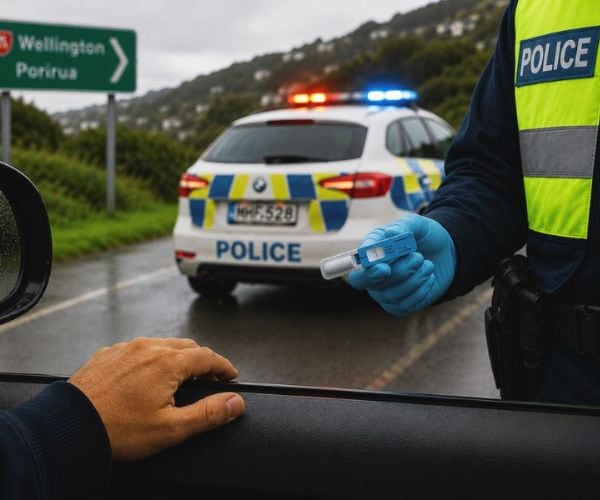
A colleague was stopped and swabbed recently. The female police officer was upset at what she was compelled to do, admitted she had covid jab-injured colleagues, and understood public resistance to further invasive procedures. But nonetheless she followed orders. Our colleague, already late for a flight, did not have the luxury of abandoning his car in the wop wops.
NZDSOS focuses on biomedical science and ethics – specifically, what foreign substances we are compelled or deceived to accept into our bodies. But this issue is also about civil liberties, due process, and the fundamental right to say NO to an invasive procedure without evidence of wrongdoing. The punishment for withholding consent is an automatic 12-hour driving ban, and hefty $400 fine and 75 demerit points. So much for innocent until proven guilty.
Justice Watch NZ’s Report
Justice Watch NZ has produced a quantitative report modelling the gross statistical failures of this legislation – whose own modelling suggests less than 1 fatal crash prevented per year out of the 105 it says are caused by impaired drivers – sent to the Prime Minister and Ministers of Police and Transport (Chris Bishop, who is the new Attorney General).
The prior Attorney General – and Minister of Everything – Judith Collins KC, found that roadside drug testing breached the New Zealand Bill of Rights Act 1990 (BORA). Her full report is here. The Justice Watch report includes a critical section on the human rights implications of this next piece of anti-human legislation.
For hundreds of years, the enlightened West has recognised that without legally secure restraint, governments descend to tyranny. That is how humans in power tend to be, sadly.
The Elephant in the Room
But is this mathematically discredited drug testing regime a smokescreen for something more troubling? Since 2021, we have witnessed a disturbing rise in unexplained medical events. Single-vehicle accidents, where drivers lose control without obvious cause, have increased. So have reports of drivers suffering sudden cardiac arrests, strokes, and unconsciousness behind the wheel.
Coroners, first responders and families are noting the pattern but it does not stop at roads. We are seeing suspicious drownings where strong swimmers suddenly perish. Sudden deaths in sport—young athletes collapsing during or after exertion. Unexplained deaths during sleep. Medical events are breaking out all over.
We know the plausible mechanism. The widespread administration of experimental mRNA injections carries known risks of myocarditis, pericarditis, thrombosis with thrombocytopenia syndrome, and microvascular damage. Spike protein persistence, immune dysregulation, and endothelial damage are documented in peer-reviewed literature.
The authorities refuse to acknowledge the connection. Instead, they roll out another intrusive, biologically questionable intervention framed as public safety. We are not buying it.
The Biomedical Blind Spot: What is in the Swab?
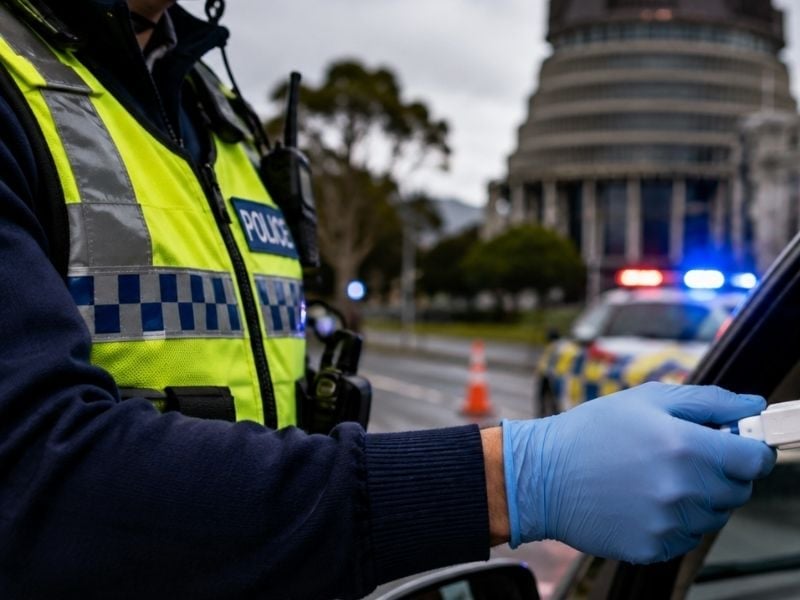
The roadside test is not a “spit test”. It is a physical scrape on the tongue using an absorbent pad soaked in a “buffer solution”. Authorities have provided no independent safety data let alone the ingredient list. We are told it is “biologically safe” by agencies with a dreadful history of deceit and cover-up.
Many supporters have seen and heard enough to refuse further government orders outright. Healthy scepticism saves lives!
So, given the current context: Why should we trust another bodily invasion for which no details are provided?

Knowns and Unknowns
1. The Scrape Creates a Pathway
Scraping the tongue causes micro-abrasions. Any chemical residue on the pad or buffer solution has a direct pathway into the bloodstream, bypassing natural defences.
2. Unknown Chemicals and Materials
The collection pad and proprietary buffer solution ingredients, potential contaminants, and toxicity data are not disclosed.
3. The Silent Risk
We are deeply suspicious of introducing unverified foreign material into the human body. Even trace preservatives or industrial by-products absorbed through an abraded tongue pose risks we cannot measure.
4. The Result Does Not Match the Science
The test detects past consumption, not current impairment. Saliva testing is notoriously unreliable for THC, often detecting drug presence long after impairment has ceased.
The Emerging Nanotechnology Concern: Quantum Dots
Next-generation roadside drug testing devices may use quantum dot (QD) technology. Quantum dots are nanoscale semiconductor crystals used as fluorescent labels in biosensors. They offer enhanced sensitivity, multiplexing capability, and rapid portable results.
We are not luddites, oppsoed to new technology on principle. However, this technology introduces new biomedical risks:
1. Toxicity Is Rationally Predictable
Quantum dots can induce oxidative stress and inflammation, potentially causing neuronal damage. Research demonstrates retinal degeneration from graphene quantum dot exposure, disrupting the blood-retina barrier through DNA methylation. Silicon QDs show time- and dose-dependent effects on antioxidant defence systems with histopathological changes. Silver selenide QDs cross the blood-brain barrier, potentially affecting the central nervous system.
2. The Scrape Creates a Direct Pathway
Mucocutaneous exposure via an abraded tongue provides a direct route for quantum dots to enter the body, bypassing natural defences. This is not controlled laboratory use.
3. Not All QDs Are the Same
Graphene quantum dots are considered more biocompatible, but studies show toxicity depends on surface modification. Negatively charged GQDs impair visual function while positively charged ones do not. Others contain heavy metals like cadmium known to be toxic. The public has no idea which type is used.
4. Composition Remains Undisclosed
While researchers can “tune” quantum dots for specific drugs, drivers tested remain unaware of the specific formulation on the swab. No independent toxicological review for this specific route of exposure has been made public.
Police can say that handing the swab to the person to scrape their own tongue means they are not invading anyone. Some uninformed people will scrape vigorously to demonstrate cooperation, guaranteeing chemicals enter the bloodstream.
Yet tongue scraping is completely unnecessary. It is not even clear the law says there must be contact with the body rather than just saliva, but the police will defer to the manufacturers instructions which they are allowed to impose onto the hapless motorist.
A bit of saliva dribbled onto the swab may be distasteful, but police have resisted being exposed to this. Most will see far worse sights in their careers. They might want to try being in health for a while!
Allowing spit would acknowledge the public’s right NOT to put potentially hazardous substances into their mouths, in order to test them for other hazardous substances!
The Core Argument Against the Regime
Justice Watch NZ’s report demonstrates that:
- Detection is a myth: At 50,000 tests per year against 2.5 billion trips, any specific trip has roughly a 1 in 50,000 chance of being tested.
- The burden is on the innocent: Under central assumptions, 95% of people compelled to test are innocent, and roughly 24 innocent people are processed for every 1 genuine detection.
- Accuracy is unknown: The Positive Predictive Value of a roadside-positive result may be only around 30 to 40%, meaning more than half flagged are not over the legal threshold. A coin toss would be better.
Our Stance: No Transparency, No Consent
The authorities ask the public to consent to a procedure that is statistically ineffective, carries unknown biological risks, and presumes guilt without reasonable suspicion.
Before allowing Police to scrape the tongues of 50,000 New Zealanders a year, we demand:
- Full disclosure of the device’s Material Safety Data Sheets
- Independent toxicology reviews of the buffer solution, collection pad, and nanomaterials
- Real-world field data on false positives, not lab-controlled conditions
- A genuine investigation into the rise in unexplained medical events since 2021
- A more rational, targeted and economical approach to getting hard drugs off our streets
Whether the Ministry of Health and NZ Police can provide this or not, they must halt the rollout on human rights grounds.
What’s Next?
Justice Watch NZ’s report details the human rights violations inherent in this law. Various other groups are lobbying too and we hope to see a legal challenge – if only to demonstrate yet again that laws don’t matter any more and we are all just cattle to the Epstein class. We encourage you to educate yourself on oral fluid testing science, emerging nanotechnology concerns, and legal arguments against random, suspicionless searches.
At the roadside, offer spit, or to do other impairment tests. Be polite and explain your reasons to the officer’s video camera. Take the punishment for refusal if you can. We believe compensation will come, if enough of us refuse to comply.
The fight is about the right to know what is being put into your body, and the right to be free from state intrusion without cause. It is also about demanding answers for unexplained deaths since 2021—events authorities ignore while chasing a different bogeyman.
Join us.
NZDSOS is an organisation focused on biomedical science and safety. We do not condone drug-impaired driving. We insist that public health interventions be based on sound, transparent science and respect for individual rights.







JUST NOT NOWING WHAT CHEMICAL IS ON THE PAD IS ALLARMING IT BRINGS BACK MEMMORIES OF SAFE AND EFFECTIVE WHICH MADE ME DECIDE NOT TO HAVE THE KILLER MRNA COVID19 JAB.
I now drive along backstreets, to avoid the most common testing places. Increasingly, they are treating us like livestock.
The Drug Road Test is the same format as the two bioweapons Covid-10 and the mRNA injection, everyone who is stopped should just say no way in hell am I not having that so called Drug test as it’s just another bioweapon which the NZ Government is using to in the end slaughter us. This bloody present ruling NZ Government really is no different than the pass NZ Labour Party Government, and this outfit is playing the very same game as that pass NZ Labour Jacinda Ardine Government, These Governments are totally controlled by the world’s Global Predators and they have an agender wish to get Governments of the day to carry out a “Cull” on the world’s population, The NZ Police are just being used as pawn’s by those paid off members of the NZ Parliament to carry intern out the Global Predators wishes by killing us. Note the mRNA injection does have an electronic chips in it, as does it manufacture Covid-19 in one’s bowel by way of the bacteria and the yeast in one’s gut, hence shedding between humans. .
Worth repeating?
Also worth repeating: presumably, an unnamed coterie of NZ authoritarians or connected supranational entities, allegedly utilising noble cause corruption in concert, across the spectrum of political and public servants in order to implement, habituate and enforce medical screening dragnets of the NZ public by police.
Grooming both the New Zealand Police and the New Zealand Populace to become accustomed to “medical screening” in order to expedite lock down, quarantines, mandated shots, and ABSOLUTE compliance.
This needs to be chased down ruthlessly and relentlessly, those useful “tools” implementing the tyranny exposed and held to full public and judicial account, everywhere … except of course, in the charade that is “State Media.”
Coercing a oerson to zllow a foreign object to be inserted into their mouth or lets say penitrate the mouth is Oral Rape by a police officer.
If they can’t tell us the ingredients, there’s no way anyone should be subjected to this. Is there an option to spit on the test?
The only possible response to this for me is non-compliance, regardless of cost. If that means a fine and time in jail…so be it. Hopefully a court challenge following. And hopefully enough people objecting to give them pause. Not counting the latter, however. Based on all the ‘trumped-up’ (no pun intended) charges of ‘resisting arrest’ happening in the U.S., it is also advisable to travel with like-minded companions as much as possible. “A three-strand cord is not quickly broken…”
I will not comply with the roadside drug test as I don’t know what’s on ‘test’ they use. They need to provide more information so we can have informed consent.
The one issue that everyone seems to be avoiding is that the tests are bogus & can’t possibly provide an accurate or even meaningful result… mmm funny… where have we encountered that before?