Process 1 and Process 2 Switcheroo: Was the Pfizer Covid Vaccine Given to New Zealanders Actually Trialled?
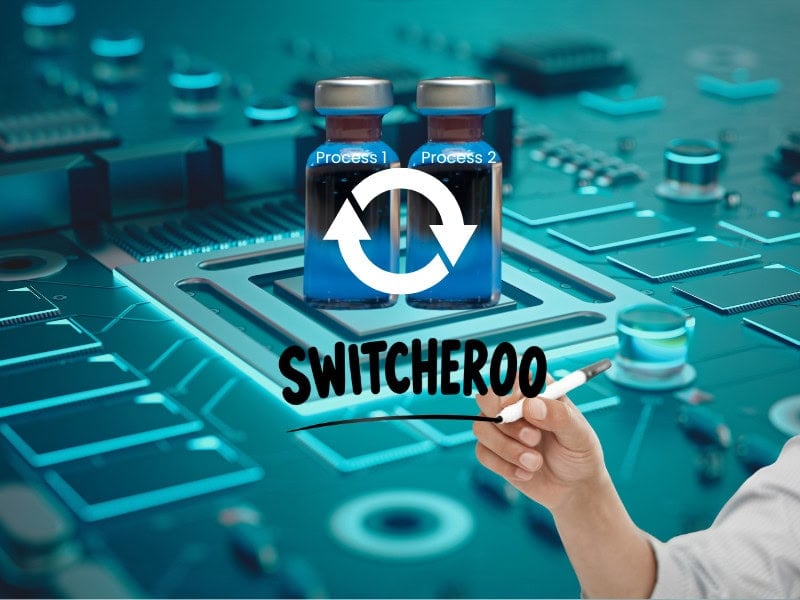
Was the Pfizer product injected into New Zealanders actually tested in a clinical trial with published results?
It appears not.
During 2021 New Zealanders were repeatedly told that Pfizer’s covid vaccine was ‘safe and effective’. We weren’t told the product being injected into the population was different from the one that Medsafe had assessed trial data for. (And even with that one, Medsafe could only conclude “the benefit risk balance … is not clear”!)
Process 1 and Process 2
Process 1 = clinical trial material produced by PCR
Process 2 = commercial material produced with DNA plasmids in bacteria
The mRNA for the clinical trial ‘vaccine’ was produced using polymerase chain reaction (PCR) technology. A DNA template was used to make multiple strands of mRNA by amplification. This process (Process 1) produced relatively pure mRNA but the amount that could be produced was limited and the technology expensive.
In order to produce the volumes required to vaccinate the world at reasonable cost, a different process needed to be used. This second process (Process 2) involved the use of DNA plasmids (small circles of genetic material) inserted into bacteria. The plasmids were the template for mRNA production and enabled large amounts to be produced quickly. However, both the bacterial material and DNA template needed to be removed before the purified mRNA could be encased in lipid nanoparticles. This created potential risks for both reduced integrity of the mRNA and significant contamination which were not present with the Process 1 product.
A trial within a trial
The initial Pfizer covid vaccine trial protocol did not mention products manufactured by different processes. There were variations of the BNT162 product assessed in the Phase 1 trials before BNT162b2 was settled upon to use in the Phase 2/3 trials.
However, during 2020 a number of amendments were made to the clinical trial protocol for BNT162b2. One of these amendments in Oct 2020 included adding a trial within the trial. This was to administer a BNT162b2 product manufactured by Process 2 to 250 randomly selected trial participants while everyone else got the Process 1 product.
The added Section 6.1.1 (p 182/376) states:
6.1.1 Manufacturing Process
The scale of the BNT162b2 manufacturing has been increased to support future supply. BNT162b2 generated using the manufacturing process supporting an increased supply (“Process 2”) will be administered to approximately 250 participants 16 to 55 years of age, per lot, in the study. The safety and immunogenicity of prophylactic BNT162b2 in individuals 16 to 55 years of age vaccinated with material generated using the existing manufacturing process “Process 1”, and with material from lots generated using the manufacturing process supporting increased supply, “Process 2”, will be described.
In brief, the process changes relate to the method of production for the DNA template that RNA drug substance is transcribed from, and the RNA drug substance purification method. The BNT162b2 drug product is then produced using a scaled-up LNP manufacturing process.
What did Medsafe know?
Medsafe’s non-clinical evaluation report for Pfizer’s covid vaccine dated 28 January 2021 includes a list of questions and answers that the European Medicines Agency (EMA) and the Therapeutic Goods Administration (TGA) had asked Pfizer.
One question (on page 28/57) is as follows [emphasis added]:
Q: “Several manufacturing process changes for BNT162b2 mRNA were introduced during development. The proposed commercial scale manufacturing process includes use of linearised plasmid DNA template for mRNA production, whereas in early development phases PCR-amplification of DNA template was used. It is not clear which manufacturing process was used for BNT162b2 mRNA used in nonclinical studies. Please clarify.”
A: “This PCR product was used as a template for mRNA production.”
So Medsafe knew in January 2021 that the Pfizer product that was intended to be injected into Kiwis was going to be manufactured by a completely different process than the product they were assessing the data for. They knew that the product destined for Kiwis had not been assessed in a clinical trial.
What happened to those 250 participants in the clinical trial?
It is noted in Version 10 of the Pfizer Protocol C4591001 dated 7 October 2022 (p 22) that an amendment had been made to remove the objective to assess safety and immunogenicity because “as of July 3, 2022, over 3.6 billion doses of BNT162b2 have been distributed, with over 1.4 billion doses of BNT162b2 administered worldwide, which were manufactured via “Process 2”. Given the number of doses now administered worldwide, the originally planned comparison of manufacturing processes is no longer warranted.”
In essence, the product has been administered to billions of people already, we don’t need to assess it for safety and effectiveness.
BMJ Rapid Response
A Rapid Response letter to the BMJ in July 2022 noted the 2 processes and the intention to study a subset of Pfizer trial participants administered the Process 2 product. The authors noted no publicly available report on the outcome of this comparison of ‘Process 1’ with ‘Process 2’ which would fit with Pfizer’s comment above.
Two batch numbers associated with Process 2 were EE8493Z and EJ0553Z. The letter also comments on apparent variability in adverse event report numbers with different batches of Pfizer product.
Was there a “Process 3”?
Other changes to the substance administered to New Zealanders and others around the world occurred. The original product used in NZ had a phosphate PBS buffer. This was changed (with little fanfare and little or no disclosure as to whether the altered final product had been tested in a clinical trial) to a tromethamine (tris) buffer in late 2021, first introduced into a product for children.
It is contrary to Good Manufacturing Practices to change the ingredients of a medicinal product during the manufacturing process. But note that under provisional consent rules, proving GMP conditions is not required.
In addition, it is not clear whether the Lipid Nanoparticles (LNPs) underwent different manufacturing processes during the clinical trial and subsequent mass manufacturing of product.
The new versions of the Comirnaty vaccine chasing the mutated variants have equally not been tested in human clinical trials, nor have the cumulative effects of boosters been provided by Pfizer to the regulators.
Summary
One Pfizer product was tested in a clinical trial. Different Pfizer products were injected into the populations of the world, including New Zealanders. No-one has published data on the small trial within a trial of the Process 2 product.
Although the EMA, FDA etc stated the 2 methods produced a substantially similar product, in making biotech medicines it is well accepted that the process is the product. In other words, it must NOT be assumed the 2nd drug injected into billions is identical to the already scantily tested (and dangerous) product submitted for approval to Medsafe. From side effect analysis, we can’t even say that delivered batches of Process 2 Comirnaty are the same as each other. A small number of batches seem to be associated with most of the deaths and severe injuries.
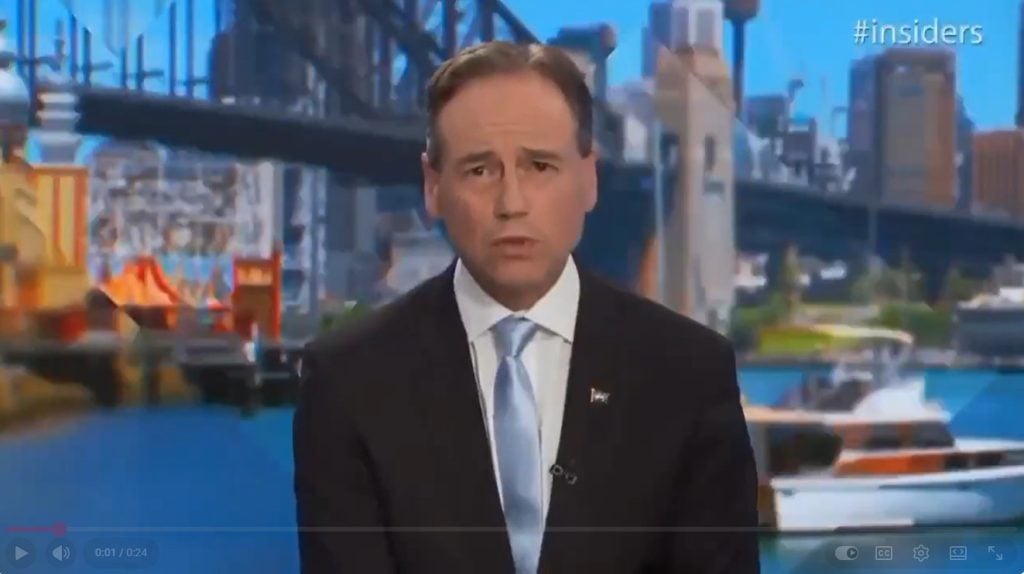
As said by former Australian Health Minister Greg Hunt: “The world is engaged in the largest clinical trial, the largest global vaccination trial, ever.”
More Reading/Watching
1. Daily Clout – Report 86 – Pfizer’s Clinical Trial “Process2” COVID Vaccine Recipients Suffered 2.4 x Adverse Events of Placebo Recipients; “Process2” Vials Were Contaminated with DNA Plasmids.
https://dailyclout.io/internal-report-28-pfizers-clinical-trial-process-2-covid-vaccine-recipients-suffered-2-4x-the-adverse-events-of-placebo-recipients-process-2-vi/
2. The COVID-19 mRNA vaccines given to the public weren’t those studied in the clinical trials https://www.youtube.com/watch?v=VH30GIjb3cg from 28.20 mins
3. The Trial Was Almost Perfect – book by Christine Cotton
https://christinecottonarchive.com/en/book/
4. David Wiseman speaking about approval of children’s vaccine with new buffer World Council for Health November 2021
https://www.worldcouncilforhealth.org/multimedia/general-assembly-meeting-november-22-2021/
5. More on the PBS to tris buffer changes – Maria Gutschi
https://mariagutschi.substack.com/p/process-3-pfizers-change-to-tris