Total Hypocrisy From the WHO: Why Are We Still Bothering With It?
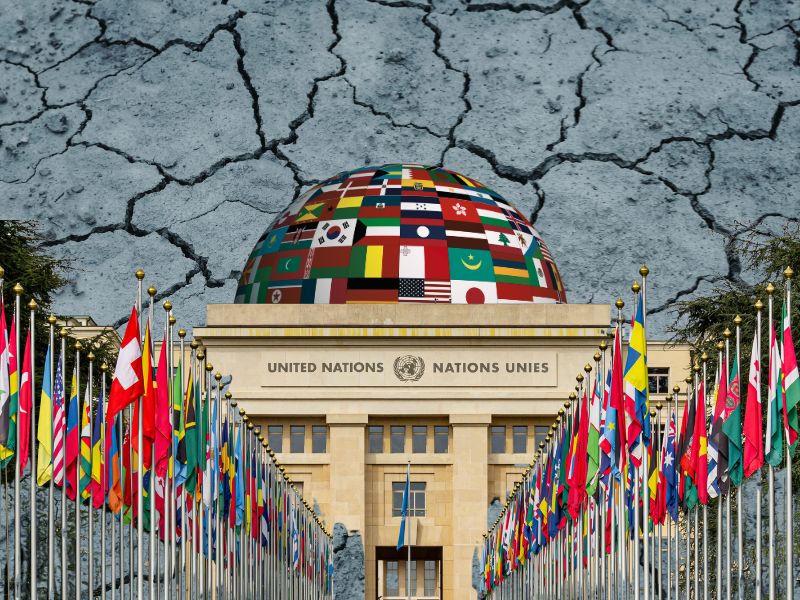
A Double Standard in Medicine Safety: WHO’s Silence on mRNA DNA Contamination
When the World Health Organization (WHO) and the United Nations Office on Drugs and Crime (UNODC) released their joint report on contaminated medicines in July 2025, it was hailed as a wake-up call. The report, “Contaminated medicines and integrity of the pharmaceutical excipients supply chain,” details decades of tragedy caused by toxic industrial chemicals – most often diethylene glycol (DEG) and ethylene glycol (EG) – illegally substituted for safer pharmaceutical ingredients. See WHO, 2025.
At least 25 documented incidents over 90 years have caused more than 1,300 deaths, most of them children. There have been recent disasters in The Gambia, Indonesia, and Uzbekistan, where nearly 300 children lost their lives to contaminated syrups. The problem is not merely historical. Some of the doubtless earnest and diligent people in the WHO and UNODC are correct: the global medicine supply chain has systemic weaknesses that criminals exploit, and children pay the price. Their call for urgent action – stronger regulation, tighter enforcement, better surveillance, and criminal accountability – is both justified and overdue. For examples of prior alerts, see WHO Medical Product Alerts (2022–23).
Swift Action for Some Contamination, Silence for Others
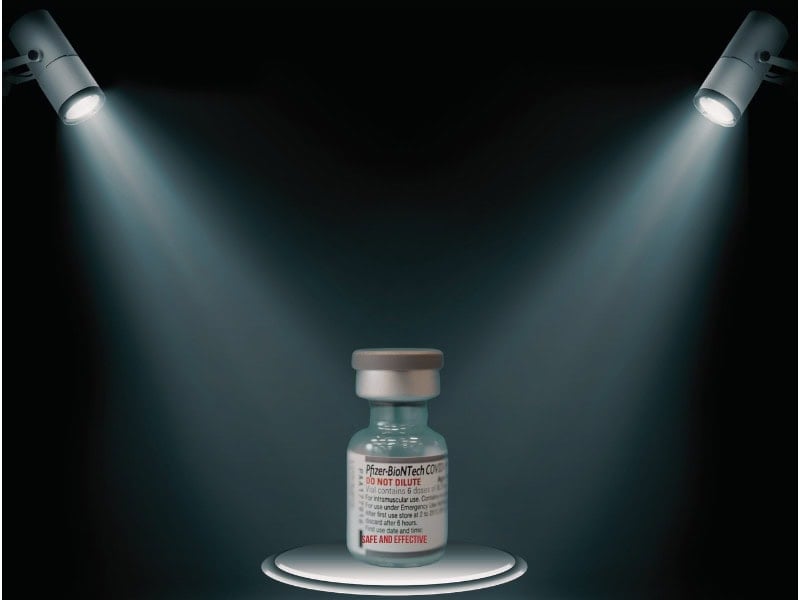
Now compare this with WHO’s handling of residual DNA fragments in mRNA vaccines such as Pfizer-BioNTech’s Comirnaty. Independent laboratories documented plasmid DNA, a ‘by-product’ of the manufacturing process, in all vaccine batches tested, at levels higher than traditional (and arbitrary) safety guideline recommendations. This is outrageous, and very frightening. See the first paper to break this, McKernan et al., 2023 preprint. Regulators have long set limits on residual DNA in biologics – typically ≤10 ng per dose, but this is only about fragmented, non-functional and measurable DNA. This is in contrast the to the fully-functional plasmid DNA strands able to be safely shuttled within their lipid nanoparticles (and thus hidden from testing), directly into the human nucleus. See FDA guidance (2010) and EMA guideline (2008).
This is the gross and revealing double standard: with inexpensive syrups, WHO assumes the worst and demands sweeping reforms and accountability. With mRNA genetic interventions, WHO assumes the best, emphasising consensus and downplaying independent findings. Both cases involve contamination. Both involve potential risks. But only one receives urgent, public action, and it’s not the one with global consequences for cancer, fertility, and all manner of deaths and disability.
However, it is worth noting a conspicuous irony here. Modified RNA jabs contain artificial lipid nanoparticles (LNPs) studded with a chemical closely related to the ethylene glycol contaminants which were concerning the WHO. Polyethylene glycol, the main component of antifreeze and an industrial detergent, is added by design, to help the LNPs dissolve their way across cell membranes. Prior to their sudden appearance in the mRNA covid jabs there was a substantial record of harm from the LNP platform. Of note, the only anticipated exemption allowable for Comirnaty was to those who already had proven PEG allergy and risked anaphylaxis.
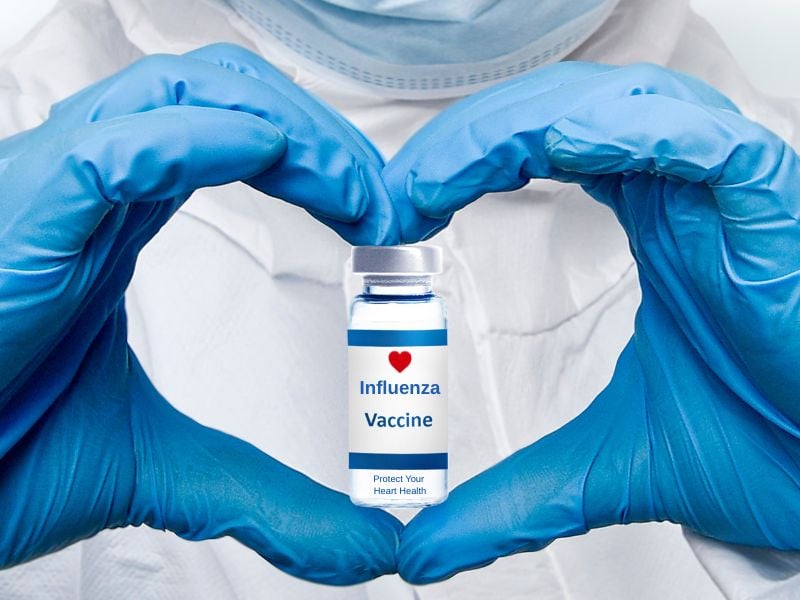
Again, a stark contrast as the WHO calls out dangerous ethylene toxins in children’s syrups, but its trade arm the Global Alliance on Vaccines and Immunisation (GAVI) is happy to see them injected directly into human blood.
The Influence of Private Donors and Industry Platforms
Context matters. The WHO’s COVID-19 response was closely tied to private donors and industry-linked initiatives. As we have shown many times, the Gates Foundation, GAVI, and CEPI were central partners in financing or enabling the mRNA rollout. The WHO repeatedly described mRNA technology as a transformative platform for future vaccines via its technology transfer hub. See the WHO donor list (2022–23), GAVI impact overview, GVDN, and the WHO mRNA technology transfer hub.
This institutional investment creates a gross conflict of interest. Acknowledging that Comirnaty batches have exceeded “safe DNA thresholds” would undermine a technology WHO has promoted alongside its donors and partners. By contrast, condemning DEG-tainted syrups from small manufacturers in developing nations carries little political cost. The result is clear bias: hard accountability for low-cost medicines in poor countries, soft reassurance for high-tech vaccines in wealthy ones.
NZ’s WHO Fork-Tongued Foot Soldiers
We have written extensively on NZ’s own apologists for WHO’s toxic behaviour, most recently here, where its past employee Helen Petousis-Harris portrays the mRNA covid jabs as soooooo wonderful that the only issue for the Royal Commission of Inquiry into Covid-19: Lessons Learned ought to be how to make the messaging even more effective next time. Remember, she is the vaccinologist who claimed that only 10 New Zealanders had experienced serious harm. But back in reality, publicly available documents show that ACC have paid out for 7 post-vaccine deaths and over one thousand injuries, Medsafe recorded over 23 thousand reports of serious harm, and based on inside knowledge Ardern’s government were preparing for up to a 1.1% chronic disability rate as the rollout began in 2021.
Other well-known narrative controllers with WHO employment on their CVs include Professor Michael Baker – busy this week lecturing psychiatrists at their annual conference about how effectively he manipulated the public’s behaviour – and the General Directing Public Health himself, Sir Ashley Bloomfield.
Science vs. Trust
Elsewhere at least, some defenders of WHO’s position, including Australia’s TGA and Health Canada, do now accept the contamination but argue that oncogenic plasmid DNA fragments in the injections are somehow safe and that established thresholds are being respected. Yet thresholds are choices – risk tolerances, not absolute truths. When independent labs document higher-than-permitted DNA levels, dismissing their work as ‘fringe’ does not build public trust. For independent analyses and commentary by a barrister who has lodged a petition with the FDA and taken on judicial corruption in Australia, see Julian Gillespie’s substack.
The point is not just to prove that mRNA gene injections are unsafe. That horse has long bolted. The point is that WHO’s hypocritical response erodes confidence of its still gullible supporters. If the principle is “no preventable harm,” (sounds familiar) then WHO surely must apply the same vigilance, transparency, and independent investigation to DNA contamination as it does to DEG poisoning. But that would mean publishing independent test results, commissioning investigations, and allowing open debate.
Instead, the WHO is caught blatantly running two sets of rules – strict for generic medicines in poorer countries, lenient for biotech platforms in wealthier ones. That is not science; it is corrupt commerce – and why countries of conscience must exit the WHO.
Equal Vigilance Was Always Required
To restore credibility, the WHO should have closed this gap. The lessons it draws from toxic excipient tragedies – stronger regulation, transparency, cross-border cooperation, and independent verification – apply in spades to new technologies like mRNA vaccines. If anything, the novelty of the platform demanded even greater scrutiny, not less.
Of course children in The Gambia should never die from poisoned syrups. But nor should billions be told “just trust” that DNA fragments in vaccines are irrelevant. Equal vigilance was the only way forward. When WHO won’t demonstrate that it holds all manufacturers and all platforms to the same standard, its credibility remains tattered. But frankly it is too late for this disreputable gang of globalist despots.
It is time to call out the WHO, those supporting it despite the blatant conflicts of interest and harm being done in the name of healing and demand a halt to this cabal imposing suffering on world citizens.
See www.whoknows.co.nz for practical steps you can take, including signing the electronic petition for NZ to exit the WHO. Don’t let the WHO write the rules of medicine behind closed doors. Our lives and sovereignty are at stake, so take action and sign the petition today. Together we are stronger.









Evil backed by evil