New Zealand Rejects IHR Amendments in Pushback Against WHO Power
This week, while the United States CDC faced legal chaos over its cancelled ACIP (Advisory Committee on Immunisation Practices) vaccine safety meeting, New Zealand quietly took a significant step to get out from under the World Health Organisation – which NZDSOS considers has become a dangerous disease-meddling and vaccine-racketeering tool for global control.
Further to our statement at the time, in this article we explore some of the ramifications and remaining risks.
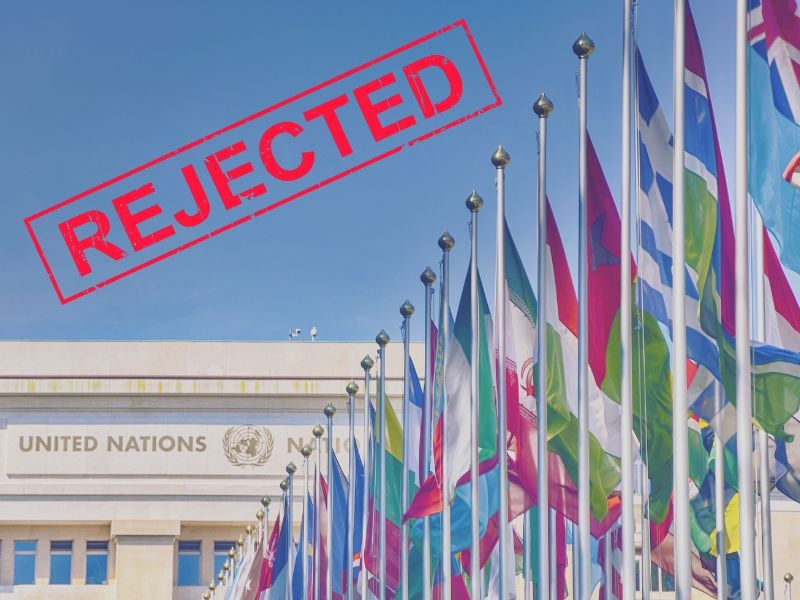
On March 16, Foreign Minister and NZ First leader Winston Peters announced that New Zealand had formally notified the WHO of its decision to reject the 2024 amendments to the International Health Regulations (IHR) .
In a statement posted to social media, Peters said New Zealand had invoked Article 61 of the IHR to decline the amendments officially, communicating the decision through New Zealand’s Permanent Mission to the UN in Geneva.
His reasoning was consistent with his electioneering and characteristically blunt: health decisions affecting New Zealanders should be made in Wellington, not Geneva. He painted the decision as delivering on New Zealand First’s promise to “prioritise New Zealand’s national interests, preserve sovereign decision-making, and resist global bureaucratic influence.”
What the IHR Amendments Would Have Done
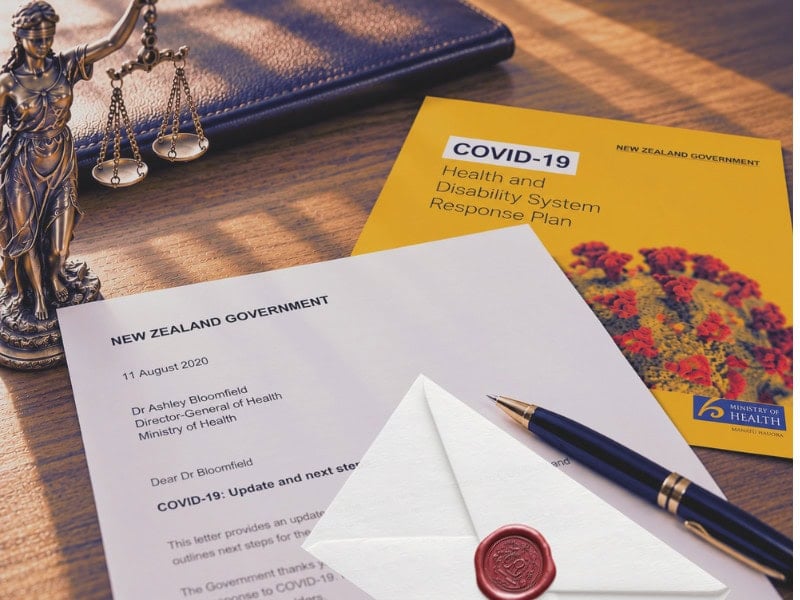
The 2024 IHR amendments, which emerged from the global COVID-19 response (with significant input from NZ’s Ashley Bloomfield), were not minor tweaks. They promised a significant transfer of authority from national governments to the WHO. Among the new obligations member states would have accepted:
- A requirement to establish a National IHR Authority to implement WHO recommendations and report on compliance
- Expanded “risk communication” obligations, including countering what is defined as mis- and disinformation
- WHO-aligned digital health standards for health documentation
- Broadened border powers, including the ability to order testing, quarantine, and require compulsory medical examinations when a “public health risk” is declared
- International sharing of personal health data deemed “essential”
- A new WHO financing mechanism with unspecified costs
The amendments also created a new definition of a “pandemic emergency” and sought to strengthen access to pharmaceuticals for developing countries – laudable goals, but ones that critics argued would have shifted significant decision-making authority away from national governments.
Why This Matters
New Zealand was one of only four nations – along with Iran, the Netherlands, and Slovakia – that rejected the 2022 amendments to the IHR. That earlier rejection gave New Zealand a longer window to consider the 2024 amendments, with a deadline of March 19, 2026.
Peters has acted just days before that deadline.
But as critics noted earlier this year, this decision came before key domestic inquiries had been completed. Phase 2 of the Royal Commission into COVID-19, examining mandates and lockdowns, reported on February 26, 2026 – just weeks ago, and the report was only made available to the public on 10 March 2026. The newly announced Independent Monetary Inquiry into COVID-era spending is not due until September, so taking on binding international commitments before this would be especially dismissive of due diligence.
Despite our wish for a complete dismissal of WHO control over our lives, we have to accept at least that Peters’ rejection of the IHR amendments preserves New Zealand’s ability to decide – once fully informed – whether to accept them in the future. But acceptance now would have been permanent.
A Cautionary Note: The Gene Technology Bill Still Looms
But there is a dark shadow hanging over this victory.
While Peters has drawn a line on the IHRs, the Gene Technology Bill remains languishing in Parliament – and it could undo much of the good work achieved by rejecting these international overreaches.
The Bill, which passed its first reading on December 17, 2024, with New Zealand First’s support, represents the most significant reform of New Zealand’s genetic modification laws in more than 30 years. It would shift New Zealand from a near-complete ban on GMO release to a licensing regime, establishing a dedicated gene technology regulator within the Environmental Protection Authority. Ex-Health Minister and doctor-who-should-know-better Shane Reti summarised the current government’s rose-tinted view here, in contrast to many who actually work the land.
New Zealand First has met its coalition obligations by supporting the Bill past its first reading, but the party’s position is clear: the Bill as it stands is “far too liberal, beyond our key trading partners, and lacks strong safeguards and protections”. Leader Winston Peters has warned that New Zealand’s pre-eminent position in markets as a “GE Free Nation” should not be traded lightly.
So why the concern for those following the IHR rejection?
Because the same globalist architecture that sought to centralise pandemic decision-making in Geneva also seeks to harmonise biotechnology regulations internationally. The WHO, the World Trade Organisation, and international standard-setting bodies have long pushed for looser genetic modification regulations as part of “trade facilitation” and “regulatory alignment”. The Gene Technology Bill, if passed without the strong safeguards New Zealand First supporters are demanding, would effectively open our doors to exactly the kind of regulatory capture that Peters has just rejected at the WHO.
The Bill is currently awaiting a second reading, with Minister Shane Reti stating that timing “is to be confirmed” as he considers the select committee’s recommendations. But the $23 million already budgeted for the new gene technology regulator, and the establishment of the Bioeconomy Science Institute, signal that the government is pressing ahead, and the PPP cheerleaders are out in force.
Peters has done the right thing on the IHRs. But if the Gene Technology Bill proceeds without the robust protections he has called for – including true regulator independence, safeguards for New Zealand’s GE-free brand, and protection for the organic sector worth $700 million annually (and growing) – then the sovereignty won back from Geneva could be quietly surrendered through Wellington.
It’s a Start
This is not the end of the story by a long stretch.
The WHO’s proposed Pandemic Agreement -a separate but related treaty – is still under negotiation, with a decision point expected in May 2026. That Agreement would go even further than the IHR amendments, potentially designating the WHO as the “directing and co-ordinating authority” for pandemic response and establishing binding mechanisms for vaccine supply chains and intellectual property.
As NZDSOS and others have shown, the Epstein/WHO/JPMorgan axis demonstrates this is far more about cashing in pandemic bonds than protecting nations.
But Peters has drawn a line and is protecting NZ from itself. He has invoked Article 61, and told the WHO that New Zealand’s health sovereignty is not for sale.
It is a start. It is more than we have seen from Labour or National in the past five years.
The question now is whether this is the beginning of a broader reckoning – or just a tactical move before the next round of globalist pressure.
What We Still Need
If this decision is to mean something, it must be followed by action at home:
- Full transparency on the Royal Commission’s findings, including Dr. Town’s suppressed testimony about the Bloomfield intervention
- A formal inquiry into the suppression of safety warnings about youth myocarditis
- Rejection of the WHO Pandemic Agreement when it comes before Cabinet in May
- Recognition of vaccine-injured New Zealanders, starting with the adoption of the WHO’s U12.9 diagnosis code
- A Protection from Gene Technology Bill with teeth – one that upholds the strong safeguards New Zealand First is demanding, rather than opening the door to the same globalist regulatory capture Peters has just rejected at the WHO
Mr Peters has shown it can be done. Now the rest of Parliament – and Peters himself, as the Gene Technology Bill returns for its second reading – must show it has the courage to follow through.
The whistleblower document from the CDC’s ACIP – released the same week Peters acted – proves that the evidence of vacine injury was always there. The IHR amendments would have locked New Zealand into a system designed to ignore that evidence, to suppress dissent, and to centralise control.
Peters has bought us time to decide, as a nation, whether we will be governed from Geneva or from Wellington – which seems bad enough.
But time is short. The Gene Technology Bill is waiting and the same coalition that supported Peters on the IHRs must now support him on scrapping the Bill. As he was told loud and clear when he addressed a rally outside Parliament, the current Bill is unfixable. Rather like the WHO itself, we say.